
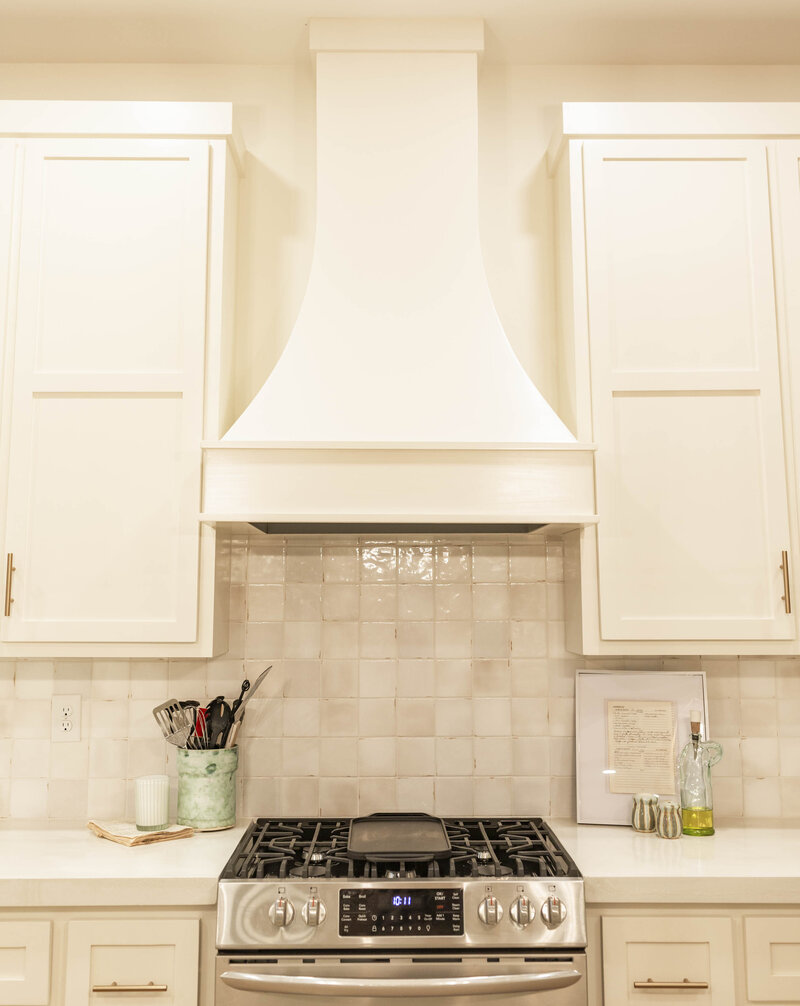
- Kitchen, Renovations
Kitchen Renovation Vancouver: Venting, Range Hood CFM & Code Requirements
- By matin@quayconstruction.ca
Table of Contents
Venting is one of the most technical components of a kitchen renovation Vancouver project — and one of the most misunderstood. Range hood sizing, duct design, and make-up air requirements are regulated under provincial and municipal mechanical standards. When handled incorrectly, they lead to failed inspections, moisture damage, or costly rework.
In Vancouver’s tightly built homes and condos, ventilation is not optional performance design. It is mechanical compliance.
Why Venting Matters in Vancouver Homes
Vancouver’s coastal climate creates persistent humidity exposure. Cooking produces steam, grease vapor, and combustion by-products from gas appliances. In sealed buildings — especially condos in Downtown Vancouver and the West End — that moisture has nowhere to go unless properly exhausted.
When ventilation is undersized or poorly ducted, moisture accumulates inside cabinet cavities, ceiling bulkheads, and wall assemblies. Over time, that can affect cabinetry lifespan, paint finish durability, and indoor air quality.
In modern open-concept layouts common in Kitsilano and Burnaby Heights, air movement becomes even more critical because cooking zones are integrated into living areas. A proper ventilation strategy must be designed as part of the renovation scope — not added at the end.
Understanding Range Hood CFM in Vancouver Renovations
CFM (Cubic Feet per Minute) measures how much air a range hood can exhaust.
In residential kitchen renovations in Vancouver, practical sizing guidelines often follow:
Electric cooktop: approximately 100 CFM per linear foot of cooktop width.
Gas cooktop: 100–150 CFM per 10,000 BTUs.
Professional-style gas range: 600–1,200+ CFM depending on total BTU output.
However, once airflow exceeds roughly 400 CFM, additional mechanical considerations may apply under the BC Building Code ventilation requirements.
Higher CFM increases air removal rate — but also increases the need for balanced air replacement.

When Make-Up Air Becomes Necessary
High-powered exhaust systems remove large volumes of interior air. If replacement air is not introduced, the home can become depressurized.
Depressurization risks include:
Back-drafting of gas appliances
Cold air infiltration during winter months
Difficulty opening exterior doors
Reduced combustion safety margins
In many jurisdictions, once range hood capacity exceeds certain thresholds (commonly 400–600 CFM depending on configuration), engineered make-up air systems are required to maintain pressure balance.
In Vancouver kitchen renovations, this is often addressed during permit review and mechanical inspection.
You can review the City’s requirements under City of Vancouver mechanical permits.
Ducting Requirements: More Than Just a Pipe
Proper duct design directly impacts performance and compliance.
Contractor-level considerations include:
Minimum duct diameter (typically 6” for moderate CFM, 8” for higher-output systems)
Limiting total equivalent duct length
Reducing excessive 90-degree elbows
Using rigid metal duct instead of flexible duct
Exterior termination with backdraft damper
Flexible ducting is common in quick upgrades but frequently fails inspection in full renovation projects because it restricts airflow and increases grease accumulation risk.
All kitchen exhaust must terminate outdoors. Venting into attic cavities or shared ceiling spaces is not permitted and will fail inspection.
Strata Rules and Condo Restrictions
In condo kitchen remodel projects, ventilation becomes more complex due to shared building systems.
Many strata buildings in Downtown Vancouver, the West End, and parts of Burnaby Heights restrict:
Exterior wall penetrations
Modifications to common ventilation shafts
Structural slab penetrations
High-CFM upgrades that affect shared airflow systems
Before installing a high-capacity hood in a condo, strata approval is typically required.
The City provides information under City of Vancouver strata property guidelines.
Failure to obtain approval can result in stop-work orders or required restoration at the owner’s expense.
Venting as Part of a Code-Compliant Renovation
Ventilation must be integrated into full renovation planning. It affects cabinetry depth, ceiling design, electrical routing, and permit sequencing.
In a properly managed kitchen renovations in Vancouver project, venting design is coordinated alongside layout planning, structural review, and inspection scheduling — not treated as a last-minute appliance decision.
This integration ensures smoother inspections and prevents mid-project redesign.

Venting System Impact on Renovation Scope
Below is a simplified overview of how ventilation capacity affects project complexity.
Scope | Hood CFM | Permit Required | Make-Up Air | Inspection Impact
Basic replacement | Under 300 | Typically no (like-for-like) | No | Minimal review
Mid-range upgrade | 300–600 | Yes | Possibly | Mechanical review
High-performance system | 600+ | Yes | Yes | Full compliance review
As airflow increases, mechanical coordination, duct routing, and inspection scrutiny increase as well.
Timeline Impact on Kitchen Renovation Projects
Improper ventilation planning can delay a renovation by two to four weeks.
Mechanical permit application
Plan review
Strata approval (if applicable)
Rough-in inspection
Final inspection
Coordinating ventilation early in the design phase protects the overall kitchen renovation timeline and prevents cabinetry rework.
Climate Considerations in Vancouver
Vancouver’s humidity levels elevate mold risk in concealed cavities.
In luxury kitchen renovation projects with high-BTU gas ranges, engineered ventilation becomes essential to prevent long-term moisture exposure in ceilings and upper cabinetry.
In older homes in Kitsilano or character houses in East Vancouver, upgrading ventilation often requires careful integration with existing framing and limited cavity depth. This is where professional mechanical planning becomes critical.

Kitchen Ventilation Requirements in Vancouver – FAQ
Do I need a permit to replace a range hood in Vancouver?
If it is a direct replacement with no change in airflow, typically no. If CFM increases or ducting changes, a mechanical permit is usually required.
What is the maximum CFM without make-up air?
Many residential systems begin triggering make-up air considerations between 400 and 600 CFM, depending on building design and appliance type.
Can condo units vent directly outside?
Only if strata permits exterior penetration and the installation complies with municipal mechanical standards.
Does ventilation affect resale value?
Yes. During resale inspections, buyers and inspectors review mechanical compliance. Non-compliant venting can delay transactions or reduce perceived value.
Final Thoughts
Kitchen ventilation in Vancouver is not just about removing cooking odors. It is about compliance, pressure balance, moisture management, and building longevity.
In tightly constructed coastal homes and multi-unit buildings, airflow design carries as much importance as cabinetry and finishes.
When properly engineered, it becomes invisible — but structurally essential to a successful kitchen renovation.
Related Posts
Best Benjamin Moore Colors for Bathroom Renovations