Kitchen Renovation Vancouver

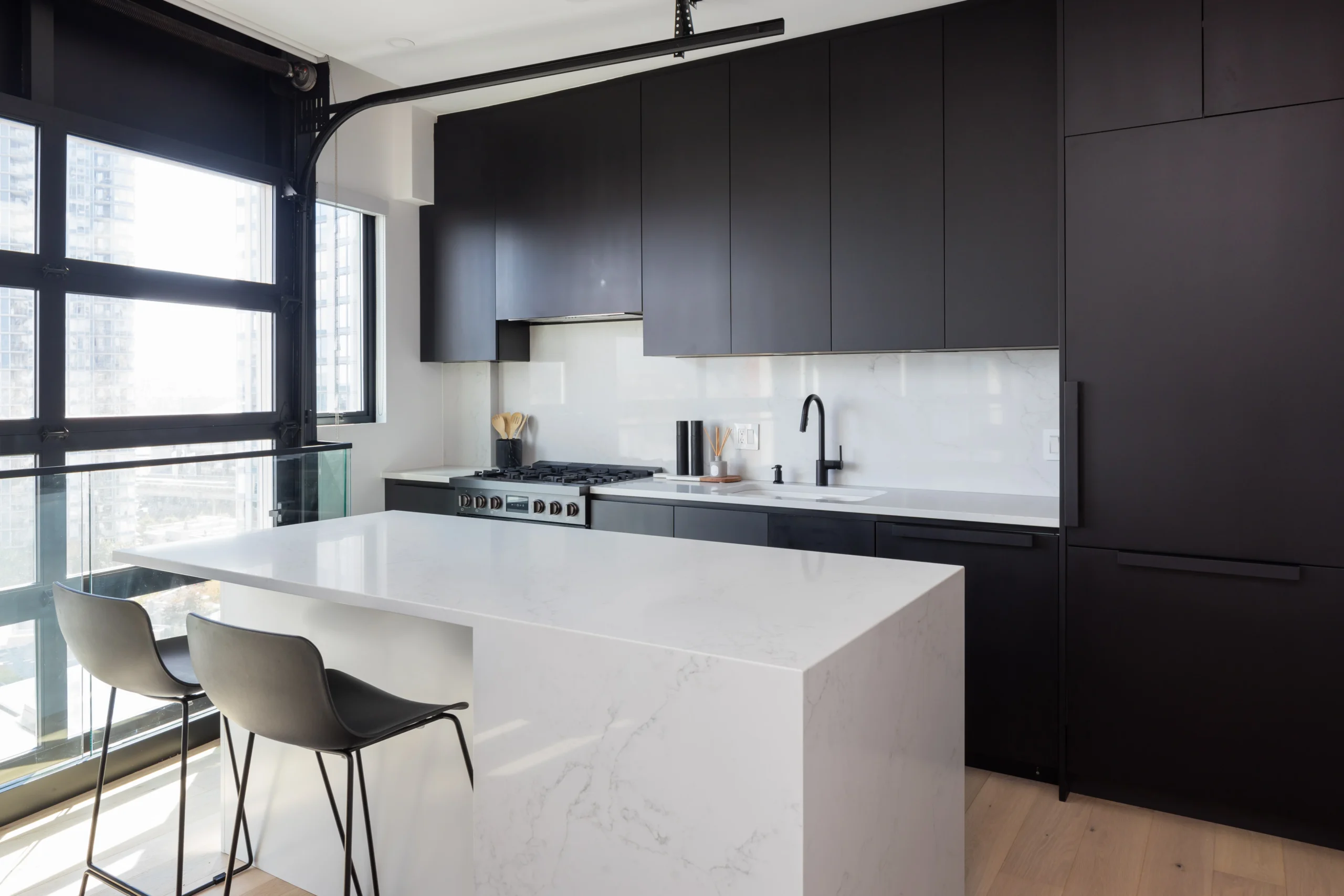
A modern kitchen renovation in Vancouver by Quay Construction featuring a large marble-topped island with light wood stools, a gold gooseneck faucet, and a white zellige tile backsplash with floating oak shelves.

Kitchen renovation in Vancouver requires more than design expertise—it demands precise knowledge of City of Vancouver permit requirements, strata approval processes, and BC Building Code compliance. QUAY Construction delivers complete kitchen renovations for Vancouver homeowners and condo owners, from initial design through final inspection, with transparent pricing and realistic timelines that account for permit wait times and construction sequencing.

Whether you’re renovating a character home in Mount Pleasant, modernizing a condo kitchen downtown, or reconfiguring a dated layout in East Vancouver, our process eliminates the cost overruns and timeline extensions that plague most kitchen projects. We handle permit applications, coordinate with strata councils, and manage inspections so your renovation moves forward on schedule.

Kitchen Renovation in Vancouver: What Makes This Market Different

Vancouver’s housing stock presents specific challenges that demand local renovation expertise. The city’s mix of heritage character homes, older concrete condos, and wood-frame buildings each require different approaches to kitchen renovation.

Character homes built before 1940 often have knob-and-tube wiring, outdated electrical panels, and plaster walls that complicate demolition and rough-in work. Renovating these kitchens typically requires electrical panel upgrades to support modern appliances and lighting, which adds both cost and permitting requirements.

Concrete condos built in the 1970s-1990s require strata approval for any work affecting common property, including plumbing risers, ventilation ducting, and sometimes even flooring replacement. Navigating strata engineering approvals and working within strict renovation hour bylaws is non-negotiable in Vancouver’s dense condo market.

The City of Vancouver permit process requires separate applications for building, plumbing, and electrical work when reconfiguring kitchen layouts. Permit wait times currently range from 3-6 weeks for standard renovations, longer if structural changes trigger additional engineering requirements. Factor this into any timeline expectation.

Strata considerations dominate condo kitchen renovations. Most strata corporations require Form B applications, engineering letters for any structural or plumbing changes, and strict adherence to renovation hours (typically 9 AM – 5 PM weekdays only). Failure to secure proper approvals upfront can result in stop-work orders and expensive remediation.

Experience working within Vancouver’s regulatory environment—and maintaining relationships with City inspectors, engineers, and strata councils—directly impacts whether your renovation finishes on time and on budget.

Kitchen Renovation Scope: What's Actually Included

Understanding exactly what work is involved in a kitchen renovation prevents scope creep and budget surprises. Here’s what a complete kitchen renovation in Vancouver typically includes.

Demolition and protection

Removing existing cabinets, countertops, appliances, and sometimes flooring. Protecting adjacent rooms, hardwood floors, and building common areas (critical in condos). Disposal and recycling of demolished materials.

Structural modifications

Removing or modifying walls (requires engineering assessment if load-bearing), installing support beams or posts, reconfiguring door or window openings. Any structural change requires a City of Vancouver building permit and engineered drawings.

Rough-in work

Relocating or adding plumbing supply and drain lines, moving electrical circuits, upgrading electrical panels if necessary, installing new ventilation ducting. This work requires separate plumbing and electrical permits and must pass rough-in inspections before closing walls.

Drywall and finishing

Patching or replacing drywall, taping and mudding, texture matching (especially important in character homes), priming and painting. Quality finishing work determines whether your renovation looks like a professional job or a DIY attempt.

Cabinet installation

Installing base and upper cabinets level and plumb, shimming and scribing to uneven Vancouver floors and walls, securing to studs per code, coordinating with countertop templating.

Countertops

Templating (occurs after cabinet installation), fabrication, installation, and sealing. Lead times for quartz and granite fabrication typically run 2-3 weeks in Vancouver.

Appliance installation

Coordinating delivery, installing and connecting built-in appliances, ensuring proper electrical and gas connections, verifying ventilation meets BC Building Code requirements for range hoods.

Flooring

Removing old flooring, addressing subfloor issues, installing new flooring (tile, hardwood, luxury vinyl), coordinating transitions to adjacent rooms.

Finishing details

Installing backsplash tile, trim and baseboards, hardware, lighting fixtures, under-cabinet lighting, final paint touch-ups.

Final inspections

Scheduling and passing City of Vancouver inspections for plumbing, electrical, and building (if applicable), obtaining final sign-off, delivering permits and inspection records to homeowner (required for strata and future resale).

Ready to explore what's possible for your property?

Kitchen design in Vancouver requires balancing aesthetic preferences with structural realities, code requirements, and budget constraints. Poor planning creates expensive change orders during construction.

Space planning comes first. Before selecting cabinet styles or countertop materials, establish whether your existing layout functions properly. Common Vancouver kitchen issues include inadequate counter space, poor work triangle efficiency, insufficient storage, and awkward appliance placement. Fixing layout issues requires moving plumbing and electrical—which means permits, inspections, and additional cost.

Structural assessment determines feasibility. Want to remove a wall for an open-concept layout? That wall may be load-bearing, requiring an engineer to design a beam and post system to carry the load above. In condos, removing walls may affect common property structure and require strata engineering approval. Know what’s possible before falling in love with a design.

Electrical capacity matters. Modern kitchens demand significant electrical loads: induction cooktops, convection ovens, dishwashers, refrigerators, small appliance circuits, and under-cabinet lighting. Older Vancouver homes often have 60-100 amp service panels that can’t support this load. Budget for panel upgrades if your home was built before 1980.

Ventilation requirements are code-mandated. BC Building Code requires mechanical ventilation for all kitchens. Range hoods must be ducted to exterior, not recirculated. In condos, adding or modifying ductwork may require strata approval and engineering review to ensure you’re not compromising fire separation or building envelope integrity.

Material selection impacts budget and timeline. Custom cabinets take 8-12 weeks to fabricate in Vancouver. Stock or semi-custom options reduce lead time to 2-4 weeks. Quartz countertops require 2-3 weeks from template to installation. Tile backsplashes add labor time. Every material choice affects both budget and schedule.

Permit drawings must be complete. City of Vancouver requires stamped drawings for structural changes, detailed electrical and plumbing plans, and specifications for materials and connections. Incomplete permit applications get rejected, adding weeks to your timeline. Professional permit drawings cost $2,000-$4,500 but prevent delays.

Design decisions made during planning directly determine construction cost, timeline, and whether your renovation requires extensive permitting or minimal approvals.

Permits and Inspections: Navigating City of Vancouver Requirements

Permit requirements for kitchen renovations in Vancouver depend on scope of work. Understanding what triggers permits—and the inspection process—prevents illegal work and future resale complications.

When permits are required: Any work involving structural changes (removing or modifying walls), plumbing alterations (moving sinks, dishwashers, or gas lines), electrical work (new circuits, panel upgrades, relocated outlets), or ventilation modifications (new range hood ducting). Cosmetic updates (replacing cabinets and countertops without moving plumbing or electrical) typically don’t require permits.

Building permit: Required when removing or modifying walls, changing room layout, or performing structural work. Application requires stamped engineering drawings if load-bearing elements are affected. Current processing time: 4-6 weeks. Cost: approximately $500-$1,200 depending on project value.

Plumbing permit: Required for relocating or adding plumbing fixtures, modifying drain lines, or installing gas connections. Requires rough-in inspection before closing walls and final inspection after fixture installation. Processing time: 3-4 weeks. Cost: $200-$400.

Electrical permit: Required for new circuits, panel upgrades, relocated outlets, or hardwired appliances. Requires rough-in inspection before drywall and final inspection after fixtures installed. Processing time: 3-4 weeks. Cost: $150-$300.

Inspection sequence: Rough-in inspections occur after framing, plumbing, and electrical work is complete but before drywall installation. Inspectors verify code compliance for all concealed work. Final inspections occur after all finish work is complete. Failing inspections requires remediation and re-inspection, adding time and cost.

Strata approval (for condos): Most strata corporations require Form B applications submitted 2-4 weeks before renovation start. Strata may require engineering letters for structural or plumbing changes, proof of insurance, contractor licenses, and detailed renovation plans. Some strata bylaws restrict renovation hours to weekdays 9 AM – 5 PM, which extends timelines.

Consequences of unpermitted work: Unpermitted structural, plumbing, or electrical work creates liability during resale. Home inspectors flag unpermitted renovations, and buyers either walk away or demand correction plus permit retroactive approval (expensive and sometimes impossible). Strata corporations can issue fines and force removal of unpermitted work in condos.

Who pulls permits: Licensed contractors can pull permits directly. Homeowners can pull permits but take on legal responsibility for code compliance. QUAY Construction pulls all required permits, coordinates inspections, and delivers final permit records to clients for their property files.

Permit timelines must be factored into renovation schedules. Projects requiring permits take 6-10 weeks longer than cosmetic updates, but the alternative—unpermitted work—creates legal and financial risk.

Construction Process and Timeline: How Kitchen Renovations Actually Unfold

Understanding the construction sequence prevents unrealistic timeline expectations and helps coordinate decisions that must happen at specific milestones.

Pre-Construction Phase (2-4 Weeks)

Finalizing design, selecting materials, ordering long-lead items (cabinets, countertops), submitting permit applications, securing strata approvals if required. This phase determines whether construction starts on schedule.

Demolition (1 Day)

Removing existing cabinets, countertops, appliances, and sometimes flooring. Protecting adjacent spaces and building common areas. Disposing of debris. Condos require weekend/evening dumpster coordination due to loading bay access restrictions.

Rough-in work (1 Day)

Relocating plumbing supply and drain lines, running new electrical circuits, upgrading panels if necessary, installing ventilation ducting. Coordinating rough-in inspections for plumbing and electrical before drywall installation.

Cabinet installation (1 Day)

Installing base cabinets level and plumb, installing upper cabinets, adjusting for uneven Vancouver floors and walls, coordinating countertop template appointment. Cabinets must be fully installed before templating occurs.

Countertop template and installation (7 Days)

Fabricator templates installed cabinets, fabricates countertops, schedules installation. Lead time is outside contractor control—factor this into timeline expectations.

Plumbing and electrical finish (2 Days)

Installing sinks, faucets, dishwasher connections, hardwired appliances, lighting fixtures, switches and outlets. Coordinating final inspections with City of Vancouver.

Flooring installation (1 Day)

Installing tile, hardwood, or luxury vinyl. Tile requires grout cure time before heavy traffic. Hardwood requires acclimation period before installation.

Backsplash and finishing details (1 Day)

Installing tile backsplash, trim and baseboards, cabinet hardware, final paint touch-ups.

Final inspections and completion (1 Day)

Scheduling final inspections for plumbing, electrical, and building permits, addressing any deficiencies, obtaining final sign-off, cleaning, walk-through with homeowner.

Total timeline:

Cosmetic minor refreshes and kitchen renovations not requiering permits are typically completed in just 15 days or less. Renovations involving permits, such as full kitchen remodels or kitchen additions can take anywhere between 6 - 8 weeks.

Kitchen Renovation Costs in Vancouver: Realistic Budget Expectations

Kitchen renovation costs in Vancouver vary dramatically based on scope, materials, and structural complexity. Here’s what drives costs and realistic budget ranges.


Standard renovation ($45,000-$75,000+)

Cabinet and countertop replacement plus some plumbing/electrical relocation, new flooring, upgraded lighting, appliance installation. Includes permits, inspections, and contractor coordination. Mid-to-upper-grade materials. Timeline: 15 Days

Full reconfiguration ($75,000-$125,000+)

Complete layout change, wall removal or modification, significant plumbing and electrical work, structural beam installation, full permitting and engineering. High-grade cabinets, stone countertops, tile or hardwood flooring, premium appliances. Timeline: 6 - 8 weeks.

Labor & Overhead Considerations

Labor represents 40-50% of total renovation cost and varies based on trade skill requirements, project duration, site access challenges (especially in high-rise condos), and coordination complexity. Vancouver's contractor market has significant price variation—we provide detailed labor breakdowns showing how our pricing reflects quality workmanship and project management rigor.

Contingency Planning for Concealed Conditions

Older homes routinely reveal concealed issues during demolition—rotted framing, outdated wiring, plumbing leaks, or mold. We recommend 15-20% contingency budgets for homes over 40 years old to address unforeseen conditions without project delays or financing scrambles.

Cost drivers specific to Vancouver kitchen renovations:

Labor rates

Vancouver trades command premium rates. Experienced carpenters, plumbers, and electricians bill $80-$160/hour. Full kitchen renovations require 300-500 labor hours depending on scope.

Permit and engineering costs

Building permits ($500-$1,200), plumbing permits ($200-$400), electrical permits ($150-$300), engineering drawings for structural work ($1,500-$3,500). Add 5-8% to total project cost for permitting and professional fees.

Strata fees and requirements

Condo renovations may incur strata application fees ($100-$500), engineering report requirements ($1,000-$2,000), and elevator booking fees ($200-$500). Some strata corporations require deposits ($5,000-$10,000) refunded after renovation completion.

Electrical panel upgrades

Common in pre-1980 Vancouver homes. Upgrading from 100-amp to 200-amp service costs $3,000-$5,000 including permit and inspection. Required when adding high-load appliances (induction cooktop, double ovens) to older electrical systems.

Structural beam installation

Removing load-bearing walls requires steel or engineered wood beams. Materials, fabrication, installation, and engineering cost $4,000-$8,000 depending on span and load.

Ventilation compliance

Installing or upgrading range hood ducting to meet BC Building Code exterior venting requirements costs $800-$2,000 in single-family homes, more in condos if common property penetrations require strata engineering approval.

Quality Control and Code Compliance: How Work Gets Verified

Quality control in kitchen renovation determines whether your project lasts 20 years or requires repairs within 5. Here’s how professional contractors ensure code compliance and quality workmanship.

Permit compliance verification: All structural, plumbing, and electrical work must meet BC Building Code, Canadian Electrical Code, and BC Plumbing Code requirements. City of Vancouver inspectors verify compliance at rough-in and final inspection stages. Work that doesn’t meet code must be corrected before permits close.

Structural work verification: Load-bearing wall removal requires engineered beam sizing and installation per stamped drawings. Beams must bear on posts or walls with adequate foundation support. Improper structural work creates safety hazards and liability.

Plumbing code compliance: Kitchen sink drains require proper venting (prevents slow drainage and sewer gas), correct trap configuration, adequate pipe slope, proper materials (ABS or PVC for drains, copper or PEX for supply). Dishwasher drains require high loops or air gaps to prevent backflow. Gas connections require pressure testing and inspection.

Electrical code compliance: Kitchen requires minimum two 20-amp small appliance circuits, dedicated circuits for dishwasher and refrigerator, GFCI protection for countertop outlets, proper wire sizing for loads, correct box fill calculations, proper grounding. Range hoods and hardwired appliances require dedicated circuits.

Ventilation code requirements: BC Building Code mandates kitchen ventilation either through range hood ducted to exterior (minimum 100 CFM) or dedicated exhaust fan. Recirculating range hoods don’t meet code. Ductwork must be smooth metal (flex duct not permitted), properly sized for CFM rating, and terminate at exterior with proper dampers.

Cabinet installation quality: Cabinets must be installed level, plumb, and securely fastened to wall studs. Upper cabinets require screws into at least two studs. Filler strips, scribing, and shims address Vancouver’s typically unlevel floors and out-of-plumb walls. Poor installation creates doors that won’t close and drawers that won’t operate smoothly.

Countertop installation quality: Seams should be tight and level, overhangs consistent, cutouts properly sized and sealed, undermount sinks supported per manufacturer specifications. Poor template work or fabrication creates gaps, lippage, or structural issues.

Tile installation quality: Proper substrate preparation (cement board over moisture-prone areas), consistent grout lines, proper thinset coverage (prevents hollow tiles), sealed grout to prevent staining. Lippage (uneven tile edges) indicates poor installation.

Final quality verification: Walk-through inspection checking cabinet operation, countertop seams, tile installation, plumbing fixture operation, electrical function, paint finish, floor transitions, trim details. Creating deficiency list and completion timeline for any outstanding items.

Warranty and documentation: QUAY Construction provides written warranty on workmanship, copies of all permits and inspection records, material warranty documentation, and care/maintenance instructions. Permit records are required for strata files and future resale.

Quality control isn’t an afterthought—it’s built into every phase through proper permit compliance, code-trained trades, and systematic verification before each subsequent phase begins.

Why QUAY Construction for Kitchen Renovation in Vancouver

Most kitchen renovation failures stem from poor planning, inadequate permitting, unrealistic budgets, or contractor inexperience with Vancouver’s regulatory environment. QUAY Construction operates differently.

Permit and code expertise: We maintain direct relationships with City of Vancouver building, plumbing, and electrical inspectors. We know current code requirements, inspection expectations, and what triggers additional engineering review. This prevents permit rejections and failed inspections that delay timelines.

Strata coordination experience: We’ve navigated hundreds of strata approvals in Vancouver condo buildings. We know what engineering documentation strata councils require, how to submit complete Form B applications, and how to work within strict renovation hour bylaws. We prevent stop-work orders from strata violations.

Transparent cost methodology: We provide itemized quotes separating labor, materials, permits, and contingencies. Allowances are clearly stated with upgrade pricing documented. You know exactly what you’re paying for and where budget flexibility exists.

Realistic timeline commitments: We factor permit processing wait times, material lead times, inspection scheduling, and strata requirements into project schedules. We don’t promise compressed timelines that require cutting corners or skipping permits.

Engineered approach to structural work: When removing walls or modifying structure, we engage qualified structural engineers upfront to design proper beam and support systems. We don’t guess at structural adequacy—we engineer it correctly.

Electrical system assessment: Before finalizing kitchen designs, we assess existing electrical panel capacity. If your panel can’t support modern kitchen loads, we identify this during planning—not during construction when it creates expensive delays.

Quality trade relationships: We work with licensed plumbers, electricians, and gas fitters who understand code requirements and pass inspections consistently. We don’t subcontract to unqualified trades who create compliance issues.

Communication discipline: You receive weekly progress updates, advance notice of material selection deadlines, heads-up on inspection scheduling, and immediate notification of any unforeseen conditions discovered during construction.

Risk reduction focus: Our process identifies potential issues—structural unknowns, electrical capacity, permit complexities, strata approval risks—during planning before they become construction problems. We engineer solutions proactively rather than reactively.

Typical contractors operate on vague scopes, verbal estimates, and compressed timelines that sound appealing but rarely materialize. QUAY Construction delivers what we commit to by planning thoroughly, permitting properly, and executing systematically.

The QUAY Construction Kitchen Renovation Process

01 Initial Consultation

We visit your property to assess existing conditions, discuss your functional requirements and design preferences, evaluate structural considerations, review electrical panel capacity, identify permit requirements, and discuss strata approval needs if applicable. You receive preliminary feasibility assessment and rough budget range based on scope discussion.

02 Budget Alignment

We develop detailed scope of work document outlining every task, material, and trade requirement. We create itemized cost estimate separating labor, materials, permits, engineering, and contingency. We identify long-lead items and materials requiring early selection. We clarify what's included and what's excluded to prevent scope creep. You receive complete cost transparency before committing.

03 Design & Permitting

We finalize kitchen layout and material selections. We coordinate engineering drawings for structural work if required. We prepare and submit permit applications to City of Vancouver. We submit strata Form B applications with required documentation. We order long-lead materials (cabinets, countertops). Construction doesn't start until permits are approved and materials are confirmed available.

04 Pre-Construction Preparation

We coordinate demolition timing and site protection requirements. We establish construction schedule with milestone dates. We confirm inspection timing with City of Vancouver. We notify neighbors (in condos, strata management coordinates). We establish communication protocols and weekly update schedule.

05 Demolition and Structural Work

We remove existing cabinets, countertops, and appliances with proper protection of adjacent spaces. We perform structural modifications per engineered drawings if walls are being removed. We pass building permit rough-in inspection before proceeding. Unforeseen conditions discovered during demolition are documented, photographed, and priced before proceeding with remediation.

06 Rough-in Installation

We relocate or install new plumbing supply and drain lines. We run electrical circuits and upgrade panels if required. We install ventilation ducting to code requirements. We coordinate rough-in inspections for plumbing and electrical. Work proceeds only after passing rough-in inspections.

07 Drywall and Finishing

We install and finish drywall, match textures in character homes, prime and paint walls and ceilings. We coordinate cabinet delivery and confirm countertop template appointment.

08 Cabinet Installation

We install base and upper cabinets level and plumb despite Vancouver's typically unlevel floors. We coordinate countertop template appointment (must occur after cabinet installation). We maintain contact with countertop fabricator to track fabrication timeline.

09 Plumbing, Electrical, and Flooring

We install flooring while countertops are being fabricated. We rough-in plumbing and electrical for final fixture installation. We prepare for countertop installation and final fixture hookups.

10 Countertop Installation

We coordinate countertop installation and inspect seams, overhangs, and cutouts. We install sinks, faucets, dishwasher connections, and appliances. We complete electrical finish work including lighting and outlets. We install backsplash tile, trim, and cabinet hardware.

11 Final Inspections

We schedule and coordinate final City of Vancouver inspections for all permits. We address any inspection deficiencies immediately. We perform detailed cleaning and final walk-through. We deliver permit records, inspection sign-offs, warranty documentation, and care instructions.

12 Post-Completion Support

We remain available for questions, minor adjustments, or warranty items. We provide 2-year workmanship warranty and coordinate material warranty claims if needed.

Local Expertise: Kitchen Renovations Across Vancouver

Vancouver’s diverse housing stock requires adapting renovation approaches to specific building types and neighborhoods.

Mount Pleasant and East Vancouver character homes: Pre-1940 homes with original plaster walls, knob-and-tube wiring, and small galley kitchens. Renovations typically require electrical panel upgrades, plaster repair or replacement, and careful demolition to preserve heritage details. These homes often have load-bearing walls requiring engineered beams for open-concept conversions.

West Side heritage homes: Larger character homes with formal dining rooms adjacent to kitchens, creating opportunities for expansion. Heritage designation may require Heritage Alteration Permit in addition to standard building permits, adding 4-8 weeks to approval timelines. Design must respect heritage character—modern interventions must be reversible.

Concrete condos (Downtown, Yaletown, Coal Harbour): 1970s-1990s concrete construction with plumbing risers and ventilation shafts serving multiple units. Modifications affecting common property require strata engineering approval. Strict renovation hours (typically 9 AM – 5 PM weekdays) extend timelines. Noise complaints from neighbors require careful scheduling and communication.

Wood-frame condos (Kitsilano, Mount Pleasant, Commercial Drive): Easier to modify than concrete but still require strata approval for structural or plumbing changes. Sound transmission concerns require maintaining proper fire separation and acoustic isolation when removing walls.

New construction townhomes: Modern electrical and plumbing systems simplify renovations but builder-grade finishes often require complete replacement. Open-concept layouts limit structural modification options.

Our experience across Vancouver’s neighborhoods means we anticipate building-specific challenges—whether that’s navigating heritage requirements in Grandview-Woodland, coordinating strata approvals in False Creek, or managing electrical upgrades in Dunbar character homes.

We work regularly with City of Vancouver inspectors, Vancouver Heritage Commission on designated properties, strata management companies across the city, and structural engineers familiar with local building types. This network prevents delays and ensures compliant, quality work regardless of your property type or location.

Frequently Asked Questions: Bathroom Renovation Vancouver

How much does a kitchen renovation cost in Vancouver?

Kitchen renovation costs in Vancouver range from $25,000 for cosmetic updates (cabinets and countertops only) to $75,000-$125,000+ for full reconfigurations with structural changes, new plumbing and electrical layouts, and high-grade materials. Average renovations with mid-grade materials and some layout modifications cost $45,000-$75,000. Costs depend on scope, materials, permit requirements, and whether structural modifications are needed. Electrical panel upgrades, required in many pre-1980 homes, add $3,000-$5,000. Strata engineering requirements in condos add $1,000-$2,000.

Do I need a permit to renovate my kitchen in Vancouver?

You need City of Vancouver permits if your renovation involves structural changes (removing or modifying walls), plumbing alterations (moving sinks, dishwashers, or gas lines), electrical work (new circuits, panel upgrades), or ventilation modifications (new range hood ducting). Cosmetic updates replacing cabinets and countertops without relocating plumbing or electrical typically don’t require permits. Condo owners also need strata approval via Form B application for most renovation work. Permit costs range from $500-$1,500 depending on scope, with processing times of 3-6 weeks.

How long does a kitchen renovation take in Vancouver?

Cosmetic kitchen renovations without permits take 3-4 weeks from start to completion. Standard renovations requiring permits and some plumbing/electrical relocation take 6-8 weeks including permit approval time. Full kitchen reconfigurations with structural changes, wall removal, and complete layout modifications take 10-14 weeks including permit processing, engineering, and inspections. Permit wait times (3-6 weeks), material lead times for custom cabinets (8-12 weeks), and countertop fabrication (2-3 weeks) drive timeline duration. Condo renovations may take longer due to strata approval processes and restricted renovation hours.

Can I remove a wall in my Vancouver kitchen?

Removing kitchen walls is possible but requires determining whether the wall is load-bearing. Load-bearing walls support structure above and require engineered beam and post systems to carry the load after removal. You’ll need structural engineering drawings stamped by a professional engineer, City of Vancouver building permit, and inspections before and after structural work. Non-load-bearing walls can be removed with a building permit but still require drywall, electrical, and finishing work. In condos, removing walls may affect common property structure and require strata engineering approval regardless of load-bearing status. Structural engineering and permit costs add $2,000-$4,000, beam materials and installation add $4,000-$8,000.


Do condo kitchen renovations require strata approval in Vancouver?

Yes, most Vancouver strata corporations require Form B applications for kitchen renovations, even cosmetic updates. Strata approval typically requires submitting renovation plans, contractor insurance and licensing proof, and engineering letters if work affects plumbing risers, ventilation shafts, or structural elements. Strata boards review applications at scheduled meetings, creating 2-4 week approval timelines. Most strata bylaws restrict renovation hours to weekdays 9 AM – 5 PM, which extends construction timelines. Some strata corporations require refundable deposits ($5,000-$10,000) and charge application fees ($100-$500). Failure to obtain strata approval before starting work can result in stop-work orders, fines, and forced restoration.

Will I need to upgrade my electrical panel for a kitchen renovation?

Many Vancouver homes built before 1980 have 60-100 amp electrical panels insufficient for modern kitchen loads. If you’re adding high-demand appliances (induction cooktop, wall ovens, dishwasher), upgrading lighting, or adding multiple small appliance circuits, you may need to upgrade to 200-amp service. Panel upgrades require electrical permit, BC Hydro coordination, and inspection. Cost ranges from $3,000-$5,000 including permit and inspection. We assess electrical capacity during initial consultation so upgrades are budgeted upfront, not discovered mid-construction. Modern kitchens require minimum two 20-amp small appliance circuits plus dedicated circuits for dishwasher, refrigerator, and range/cooktop.

What kitchen ventilation is required by Vancouver building code?

BC Building Code requires mechanical ventilation for all kitchens. Range hoods must be ducted to building exterior with minimum 100 CFM capacity—recirculating range hoods don’t meet code. Ductwork must be smooth rigid metal (flex duct not permitted), properly sized for hood CFM rating, and terminate outside with proper dampers and weather protection. In condos, adding or modifying ventilation ducting may require strata approval and engineering review to ensure fire separation and building envelope integrity aren’t compromised. Ventilation duct installation costs $800-$2,000 in houses, more in condos requiring common property modifications. Inspectors verify proper ventilation during final building permit inspection.

What are common unforeseen issues in Vancouver kitchen renovations?

Older Vancouver homes commonly reveal hidden problems during demolition: rotted subfloors from undetected plumbing leaks, knob-and-tube wiring requiring full replacement, outdated plumbing (galvanized pipes, cast iron drains) needing upgrading, asbestos-containing materials in drywall compound or flooring requiring abatement, structural deficiencies in floor framing or joists, plaster walls in poor condition requiring full replacement. Character homes built before 1940 have highest likelihood of unforeseen conditions. We recommend 10-15% contingency budget for homes built before 1980. Unforeseen conditions are documented, photographed, and priced before remediation begins—no surprise bills. Early assessment during planning phase can identify some issues through exploratory work before full demolition.

How do I choose between stock, semi-custom, and custom cabinets?

Stock cabinets are pre-manufactured in standard sizes with limited door styles and finishes. Advantages: lowest cost ($8,000-$15,000), fastest availability (2-4 weeks), adequate quality for budget-conscious projects. Disadvantages: limited customization, standard sizing may waste space in irregularly-shaped kitchens, fewer door style and finish options. Semi-custom cabinets offer more door styles, finishes, and sizing options than stock with moderate lead times (4-6 weeks) and cost ($15,000-$25,000). Custom cabinets are built to exact specifications with unlimited design options, specialized storage solutions, and premium materials. Cost ranges $25,000-$45,000+ with 8-12 week fabrication times. Choice depends on budget, timeline, and how important customized storage and design are to you.

What's the best countertop material for Vancouver kitchens?

Quartz dominates Vancouver kitchen countertops due to durability, low maintenance, and consistent appearance. Engineered quartz resists staining, doesn’t require sealing, withstands heat reasonably well, and offers consistent color and pattern. Cost: $4,000-$8,000 installed. Granite remains popular for natural stone appearance but requires annual sealing and shows more variation between slabs. Cost: $6,000-$12,000 installed. Marble is beautiful but porous, stains easily, and requires diligent maintenance—generally not recommended for heavily-used kitchens. Laminate is budget-friendly ($2,000-$4,000) but shows wear faster and has lower resale appeal. Butcher block adds warmth but requires regular oiling and careful maintenance around sinks. Most Vancouver kitchen renovations choose quartz for durability-to-cost ratio.

Can I live in my home during a kitchen renovation?

Yes, but expect significant disruption. During demolition and construction phases, you’ll have no kitchen sink, stove, or dishwasher. Plan for eating out, using microwave and portable appliances, or setting up temporary kitchen in another room. Dust containment measures reduce but don’t eliminate construction dust reaching other areas. Noise from demolition, cutting, and power tools occurs during working hours. In condos, strict renovation hours (typically 9 AM – 5 PM weekdays) limit noise disruption to neighbors but extend project timelines. Most homeowners stay in place for cosmetic renovations (3-4 weeks) but some relocate temporarily for extensive reconfigurations (10+ weeks). We establish dust barriers, protect floors and furnishings, and coordinate schedules to minimize disruption.

How do I prevent my kitchen renovation from going over budget?

Define complete scope in writing before starting construction. Itemize all costs including labor, materials, permits, engineering, and contingencies. Make all material selections (cabinets, countertops, tile, flooring, fixtures) before construction begins—changing selections mid-project creates change orders. Budget 10-15% contingency for unforeseen conditions in older homes. Understand what triggers permit requirements and budget accordingly. Require contractor to document and price any unforeseen conditions before proceeding with remediation. Avoid scope creep—decisions to add recessed lighting, upgrade appliances, or extend work into adjacent spaces during construction destroy budgets. QUAY Construction provides itemized quotes, clarifies allowances, and requires written approval before performing any work beyond original scope.

What should I look for when hiring a kitchen renovation contractor in Vancouver?

Verify the contractor is licensed, insured, and bonded. Check WorkSafeBC coverage to avoid liability for worker injuries. Confirm they pull permits for work requiring them and maintain relationships with City of Vancouver inspectors. Ask for references from recent kitchen renovations and verify work quality and timeline performance. Evaluate whether they provide itemized quotes or vague estimates—detailed costing indicates professionalism. Confirm they have experience with your property type (character home, concrete condo, heritage) and understand permit/strata requirements. Assess communication style and responsiveness during quoting process—poor communication before hiring becomes worse during construction. Review contract terms including payment schedule, warranty coverage, and change order process. Avoid contractors who lowball estimates to win work then nickel-and-dime through change orders.

Do I need an interior designer for my kitchen renovation?

Interior designer involvement depends on project complexity and your design confidence. For cosmetic updates with straightforward cabinet and countertop replacement, many homeowners successfully manage design selections themselves using contractor guidance. For extensive reconfigurations requiring layout optimization, space planning, and coordinating multiple finish selections, designers add value through expertise in functional layout, material coordination, and avoiding costly design mistakes. Designers charge $100-$200/hour or 10-15% of project cost. Some contractors include basic design services (layout, material guidance) as part of renovation contract. QUAY Construction provides space planning and material selection guidance for standard renovations. For complex custom designs or high-end finishes requiring extensive coordination, we recommend engaging qualified designers and work collaboratively with them throughout the project.

How do kitchen renovations affect home resale value in Vancouver?

Kitchen renovations typically return 60-80% of investment at resale in Vancouver’s market. Complete kitchen renovations ($50,000-$75,000) may add $40,000-$60,000 to home value. Returns depend on neighborhood, home value, and whether renovation quality matches market expectations for the area. Over-improving beyond neighborhood standards reduces return on investment. Kitchens with outdated cabinets, worn countertops, or dysfunctional layouts significantly hurt marketability—buyers either walk away or discount offers to account for required renovation. Well-executed renovations improve marketability more than pure dollar-for-dollar return—homes show better, photograph better, and attract more qualified buyers. Unpermitted renovations create negative value by triggering buyer concern and potential disclosure liability. QUAY Construction delivers permit records and inspection documentation that protect resale value and prevent transaction complications.

Trusted by Vancouver Homeowners

aAron marskell

This was my first home renovation experience, and I couldn’t be more glad I went with Matin and Quay Construction. 

5/5
Aaron Marskell
unnamed (1)

I had a short timeline with limited hours the building would allow work to be performed, but they got it done.

5/5
Melissa Carr
Meigan Quan

The renovation was completed very quickly and to a gold standard in the level of detail in the finishings. I am very happy with the result.

5/5
Meigan Quan

Join the homeowners who chose a planning-first approach

Get Started: Kitchen Renovation Consultation in Vancouver

Kitchen renovation in Vancouver requires more than design inspiration—it demands technical expertise in permitting, code compliance, strata coordination, and construction execution that prevents the budget overruns and timeline disasters plaguing most projects.

QUAY Construction delivers complete kitchen renovations from initial design through final City of Vancouver inspection, with transparent pricing, realistic timelines, and systematic risk reduction at every phase.

Whether you’re renovating a character home in East Vancouver, modernizing a condo kitchen downtown, or reconfiguring a dated layout in Kitsilano, we provide the permit knowledge, structural expertise, and construction discipline required to finish on schedule and on budget.

Request a consultation: We’ll assess your property, discuss scope and budget expectations, explain permit requirements specific to your property type, and provide detailed cost estimates before you commit to anything.

No obligation. No pressure. Complete transparency on what’s involved, what it costs, and how long it actually takes.