Fixed-Price vs Cost-Plus Renovation Contracts: What You're Really Agreeing To
By QUAY Construction · November 26, 2026 · Renovations
Quick answer: A fixed-price renovation contract sets one price for a defined scope before work starts, so the contractor carries the risk of their own estimate. A cost-plus contract has you pay the actual cost of labour and materials plus a fee, and time-and-materials bills hours and materials as they are used, so in both of those you carry the risk of the final total. A fixed price only stays fixed for the scope written down: changes you ask for and conditions found behind walls are priced separately. At QUAY every project gets a detailed fixed-price proposal before construction, no extra work is charged without your written approval, and the work carries a 12-month (365-day) workmanship warranty. On our West End sub-penthouse, for example, the contract was about $187,600 before GST and the owner approved about $11,000 in changes, for about $199,000 in total.
The contract type decides who absorbs the surprises, how you find out what the renovation will cost, and how much paperwork you see along the way. This guide explains the three common types in plain terms, shows where the price can still move, and uses real QUAY contracts to show what that looks like in practice. If you are planning a larger project, our home renovation service in Vancouver explains how we scope and price whole homes, condos, kitchens, bathrooms and basements.
Fixed-price, cost-plus and time-and-materials at a glance
| Fixed price (stipulated sum) | Cost-plus | Time and materials | |
|---|---|---|---|
| What you agree to pay | One price for a defined scope | Actual costs of labour, materials and trades, plus the contractor’s fee (a percentage or a fixed amount) | Hourly or daily labour rates plus materials as used |
| When you know the total | Before construction starts | At the end, unless there is a guaranteed maximum | At the end |
| Who carries estimating risk | The contractor | You | You |
| What it needs up front | A complete, detailed scope and selections | A budget estimate and a clear fee arrangement | Agreed rates and a way to track hours |
| How changes are handled | Written change orders, priced and approved before the work | Added to the running cost; the fee usually grows with it | Added to the running cost |
| Paperwork you review | The proposal, then any change orders | Invoices, receipts and the fee calculation, often monthly | Timesheets and material receipts |
| Best fit | Most renovations where the scope can be defined | Projects where the scope can’t be defined yet, or owners who want open books | Small repairs and investigative work |
How a fixed-price renovation contract works
In a fixed-price contract, sometimes called a stipulated-sum or lump-sum contract, the contractor prices a defined scope and agrees to deliver it for that number. If their labour takes longer than planned, or a trade they hired costs more than expected, that is their problem, not yours. The trade-off is that everything has to be defined first: layouts, materials, fixtures, finishes and how the work will be done. A contractor can only fix a price for what they can see and specify.
That is why a fixed price starts with scoping, not with a square-foot number. Rather than quoting a generic square-foot price, QUAY defines the actual scope and then provides a fixed-price proposal before construction begins. The proposal sets out the scope, inclusions, specifications and project investment in clear language, along with the assumptions, exclusions, schedule and approval requirements. You review the scope and pricing before you approve anything.
The benefit is a number you can plan around, from your financing to your move-out dates. The risk is a proposal that looks fixed but leaves the important parts vague. A fixed price with broad allowances, unclear inclusions and verbal changes during construction is fixed in name only, and that is where unexpected charges at completion come from. The protection is detail: the more of the job the proposal pins down, the less of it can move.
How cost-plus and time-and-materials contracts work
In a cost-plus contract you pay what the work actually costs (labour, materials, subcontractors, permits and disposal) plus the contractor’s fee for overhead and profit. The fee may be a percentage of cost or a fixed amount agreed at the start. Some cost-plus contracts add a guaranteed maximum price, a ceiling the contractor commits to, which shifts some of the risk back to them.
Cost-plus is open-book by design. You see every invoice and every receipt, and you only pay for what was used, so if the work goes well you may pay less than a fixed price would have included as a cushion. If the work goes badly, you pay for that too. And when the fee is a percentage, it rises as costs rise, so ask how the fee is calculated and whether a cap applies.
Time and materials is the simplest form: an hourly or daily rate for labour plus materials at cost or with a markup. It suits small, uncertain jobs, such as tracing a leak, opening a wall to see what is there, or a short list of repairs, where nobody can sensibly price the work before starting. On a full kitchen or a whole home it leaves you without a reliable total until the last invoice.
Neither model is dishonest; they simply put the uncertainty in different places. With a fixed price, the contractor prices the uncertainty in at the start. With cost-plus or time and materials, you take it on as the job unfolds.
What can still change a fixed price
A fixed price covers the scope in the contract. Three things can still change what you pay, and a good contract says how each one is handled.
1. Changes you choose
Upgrading a tile, adding pot lights or moving a fixture after the contract is signed changes the scope, so it changes the price. These are handled with a change order: a written description of the change, its cost and its effect on the schedule, approved by you before the work is done. At QUAY no additional work is charged without your written approval.
2. Conditions behind the walls
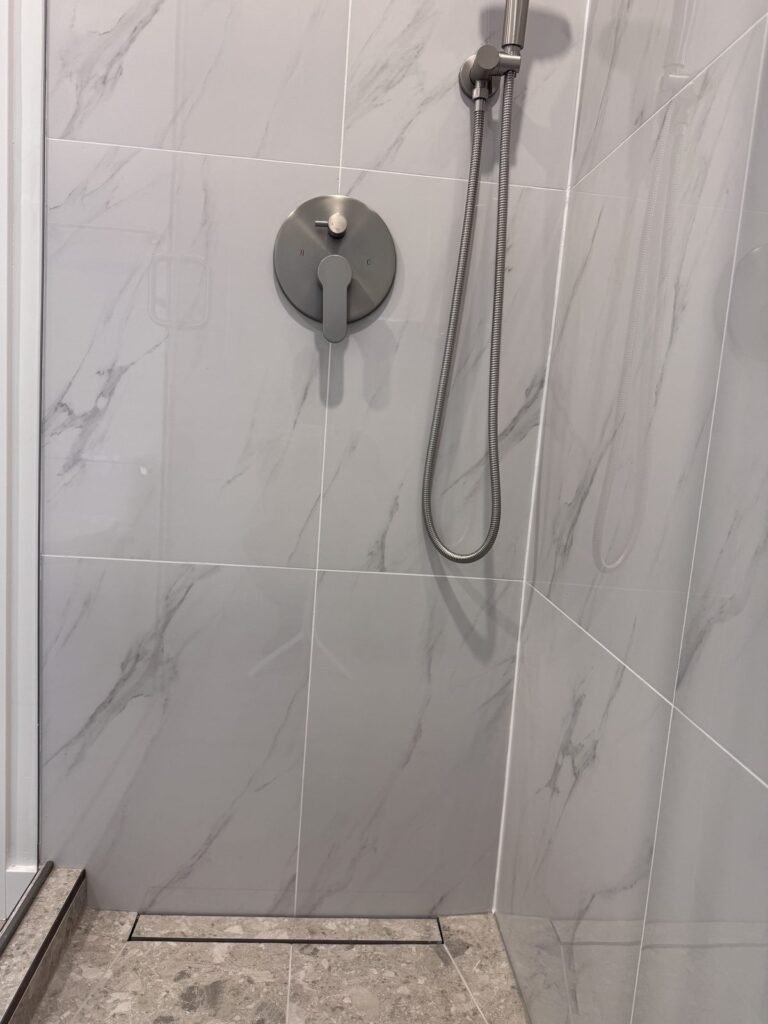
Some things can’t be seen until demolition: old plumbing that needs replacing, wiring that won’t meet code, a valve that has failed. In a fixed-price contract these are usually treated as changes, because nobody could price them in advance. On a Fairview condo ensuite we found plumbing inside a closet wall, a water valve that needed replacing, fan wiring and a breaker once the walls were open, and each item was priced and approved in writing before the work was done. In a West End condo, the water lines feeding the bathroom needed replacing, so we repiped them before tile went up, again priced and approved first.
3. Allowances
An allowance is a placeholder amount for an item that hasn’t been chosen yet, such as a light fixture or a tile. If you choose something that costs more, the difference is added; if it costs less, it is credited. Allowances are useful, but a proposal full of them is really an estimate. Broad allowances with limited detail make the final cost difficult to predict, which is why we confirm material selections in advance and itemize materials and finishes in the proposal wherever we can.
So when people talk about “renovation hidden costs”, they usually mean one of these three, discovered late. The fix is not a bigger contingency on its own but a clearer contract: defined scope, real selections, named allowances and a written approval step for every change.
Allowances, assumptions and exclusions: reading the fine print
Two proposals with the same total can describe very different renovations. Before you compare prices, compare these four parts:
- Scope and inclusions: exactly what will be built, room by room, including demolition, disposal, protection and clean-up.
- Specifications and allowances: which materials and fixtures are named, which are allowances, and what each allowance is worth.
- Assumptions: what the price takes for granted, such as the condition of the existing structure, access, working hours or strata rules.
- Exclusions: what is not included. Permits, engineering, appliances, hazardous-material testing and repairs to concealed conditions are common ones to check.
An exclusion isn’t a trick; it is information. A short exclusions list on a vague scope is a bigger risk than a long list on a detailed one. If you are getting several prices, ask every firm to price the same scope and list their allowances and exclusions, so you are comparing the same renovation.
Real QUAY contracts and where they finished
Our project pages publish both the signed contract and what changed during the work. Here is how four fixed-price condo renovations finished:
| Project | Signed contract (before GST) | What changed | Where it finished |
|---|---|---|---|
| Condo near Science World | About $53,900 | During the design phase the owner chose about $4,400 in upgrades: a different kitchen sink, toilets, tile, a thicker 3 cm countertop and window coverings | About $58,200 before GST |
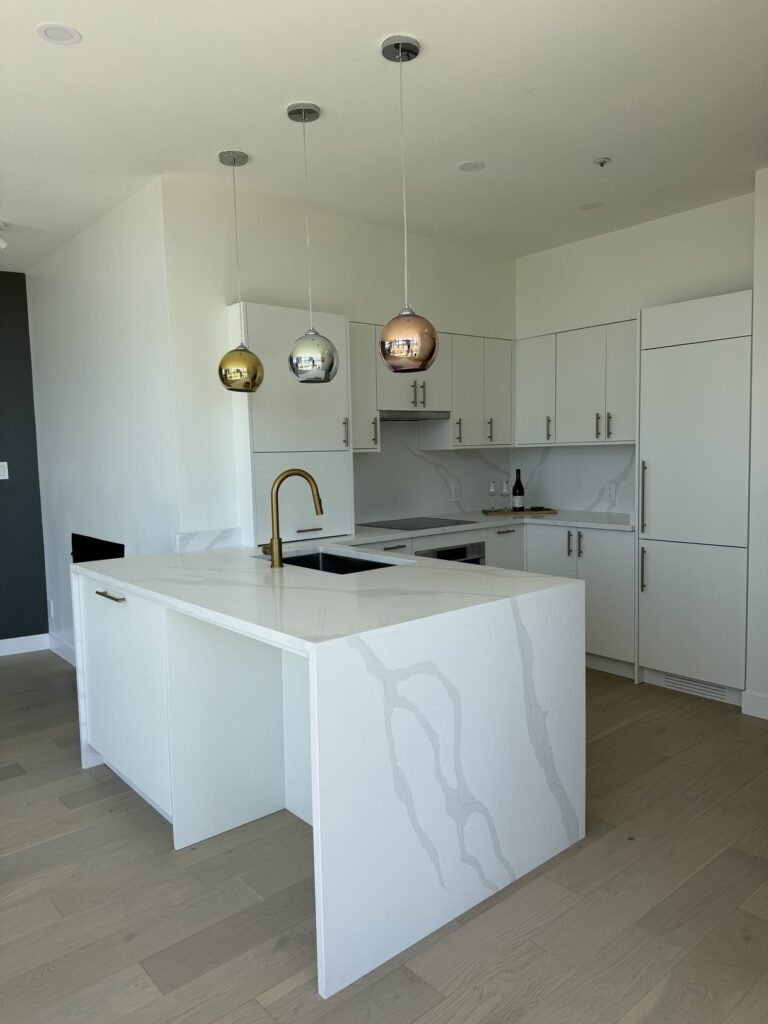
| West End sub-penthouse | About $187,600 | About $11,000 of approved changes, mostly tile and fixture upgrades, floor levelling, water shut-offs and the entry landing | About $199,000 before GST |
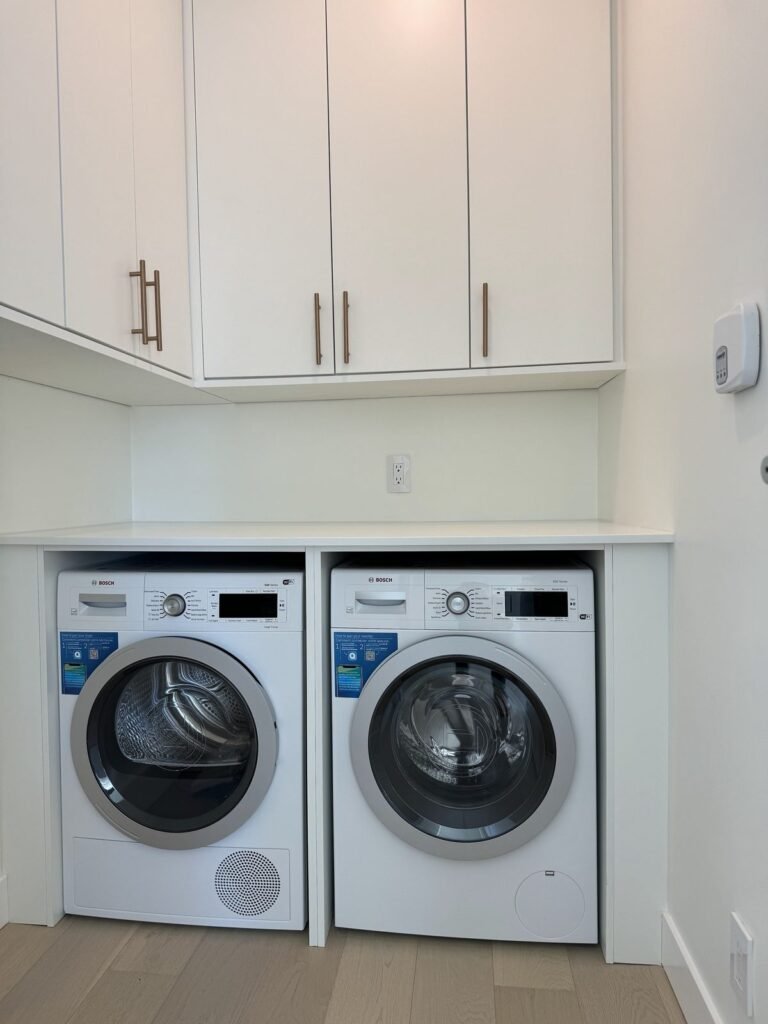
| West End two-bedroom | About $178,300 | A few approved changes: floor levelling, a new washer, dryer and thermostat, a bidet rough-in and painting the window frames | The signed contract plus those approved changes |
| Yaletown condo bathroom | About $25,000 (bathroom portion) | A few changes to the vanity plumbing, mirror and splash tile, each priced and approved in writing during the build | The signed contract plus those approved changes |
Two patterns stand out. First, most of the movement came from choices the owners made, such as better tile, different fixtures or an extra appliance, not from the contractor’s estimate being wrong. Second, the changes were known and approved as they happened, so the final total wasn’t a surprise at handover. That is what a fixed-price contract should give you: a firm price for the defined work, and a clear, written record of anything you add.
For a full breakdown of where a whole-suite budget goes, see our design-build vs general contractor guide, which walks through the sub-penthouse room by room.
Holdbacks and payments under BC’s Builders Lien Act
Whatever the contract type, British Columbia’s Builders Lien Act affects how payments work. Section 4 requires the person primarily liable on a contract under which a lien may arise to retain a holdback equal to 10% of the value of the work or materials provided (or of the payments made, whichever is greater), whether the contract is paid in instalments or on completion. Section 8 sets the holdback period, which ends 55 days after a certificate of completion is issued or, without one, 55 days after the contract or the improvement is completed, abandoned or terminated. Section 5 requires the owner to keep the holdback in a separate holdback account, but that section does not apply to a contract where the total value of work and materials is less than $100,000.
This matters for homeowners because the holdback protects you against liens from trades and suppliers further down the chain. Ask how the contractor’s payment schedule handles it, and read the Act or ask a lawyer if you are unsure how it applies to your project. This section is general information, not legal advice.
Which contract type suits your renovation
Choose a fixed price when
- You need a dependable number before you commit, for financing, a sale or a fixed budget.
- The scope can be defined: layouts, materials and finishes chosen before construction.
- You would rather review one proposal and a few change orders than monthly cost reports.
Consider cost-plus when
- The scope genuinely can’t be defined yet, for example on a heavily altered older house where the extent of the work depends on what opening it up reveals.
- You want open books and are comfortable reviewing invoices and receipts throughout.
- You can negotiate a clear fee and, ideally, a guaranteed maximum price.
Use time and materials for
- Small repairs, investigative openings and short lists of tasks where a fixed price would mostly be guesswork.
On many projects the answer is a hybrid: a fixed price for the defined work, clearly named allowances for selections still to be made, and a stated way of pricing any concealed conditions. If you are still deciding who should design and build the project, our comparison of design-build and a general contractor covers how each route affects when you get a price you can rely on.
Questions to ask before you sign
Put the same questions to every contractor, and get the answers in writing:
- Is this a fixed price, cost-plus or time and materials, and what exactly does the price cover?
- Which items are allowances, and how much is each one?
- What assumptions is the price based on, and what is excluded?
- How are changes priced and approved, and will any work be done before I approve it in writing?
- If you find something behind the walls, how is it priced, and when will I hear about it?
- On cost-plus: how is the fee calculated, is there a cap, and how often will I see invoices and receipts?
- What is the payment schedule, and how does it handle the Builders Lien Act holdback?
- What workmanship warranty do you give, and when does it start?
For trade-specific versions of this list, see our questions to ask a condo contractor before you sign and questions to ask a kitchen contractor before you hire.
Renovation contract FAQ
Is a fixed-price renovation contract really fixed?
Yes, for the scope it describes. The contractor carries the risk of their own estimate, so the price doesn’t rise because the work took longer than they planned. Changes you ask for and conditions found behind walls are outside that scope and are priced separately. At QUAY those are set out and approved in writing before the work is done.
Is cost-plus cheaper than a fixed price?
Not necessarily. Cost-plus can cost less if the work goes smoothly, because you pay actual costs rather than a price that has to cover the contractor’s risk. It can cost more if the work runs long, and a percentage fee grows as costs grow. A guaranteed maximum price limits that exposure.
What is a change order in a renovation?
A written record of a change to the contract: what is being added, removed or altered, what it costs and how it affects the schedule. You approve it before the work goes ahead. On our West End sub-penthouse, about $11,000 of approved changes took a contract of about $187,600 to about $199,000 before GST.
What is an allowance in a renovation contract?
A placeholder amount for something not yet chosen, such as a light fixture or tile. If your choice costs more than the allowance, you pay the difference; if it costs less, you receive a credit. The fewer and more specific the allowances, the more reliable the price.
Do I have to hold back 10% from my contractor in BC?
Under section 4 of BC’s Builders Lien Act, the person primarily liable on a contract under which a lien may arise must retain a 10% holdback. The holdback period ends 55 days after completion (or a certificate of completion), and a separate holdback account is not required for contracts under $100,000. This is general information, not legal advice.
Ready to get started?
Tell us about your renovation, and we will explain how we would scope it and what goes into a fixed-price proposal for your project.
Book a discovery callRelated guides
- Design-Build vs General Contractor: Which Is Right for Your Home Renovation?: who designs and builds, and when you get a price you can rely on.
- Planning a House Renovation Budget: What Drives the Cost, Contingency and Permits: setting the budget a contract has to fit.
- How to Vet a Condo Contractor in Vancouver: Questions to Ask Before You Sign: what to check about the firm before you sign.