- Renovations
Renovate or Rebuild? How to Decide for an Older Vancouver House
- By QUAY Construction
Renovate when the foundation and structure are sound and the house, renovated, can hold what you need. Look seriously at rebuilding when the foundation or framing has failed, or when you want more homes on the lot than the existing house can hold. For most older Vancouver houses, four things decide it: the condition of the structure, what the City’s zoning lets you build, whether the house is a character or heritage house, and how long you can live somewhere else. If the answer is to keep the house, our home renovation service in Vancouver explains how we scope and price that work.
Quick answer. Keep and renovate a house that is structurally sound and fits your plans, especially a pre-1940 character house, where the City offers extra units and floor area for keeping it. Rebuild when the structure has failed or when your goal, such as a multiplex, needs a new building. Compare the two paths on the same terms: what each one gives you, the full cost including demolition, permits and living elsewhere, and how long each one takes from first drawing to move-in.
This guide walks through each factor in order, with the City of Vancouver rules that apply and real QUAY projects that show what keeping a house can look like.
Start with what you want the house to do
Renovate-or-rebuild questions usually start with a complaint about the house: it is too small, too cold, too dark, or the basement is unusable. Before comparing construction paths, write down what you need at the end:
- The same house, working better: a new kitchen and bathrooms, updated wiring and plumbing, better insulation. This is renovation territory.
- More space for your household: an extra bedroom, an ensuite, a finished basement. Often possible inside or on top of the existing house.
- More homes on the lot: a rental suite, a laneway house, or several units. Some of these can be added to the existing house; a multiplex usually means a new building.
- A different house: a new layout on every floor, new ceiling heights, a new foundation. When almost nothing stays, the case for rebuilding gets stronger.
The more of the existing house you can use as it is, the stronger the case for renovating. The more of it you would change, the closer a renovation gets to a rebuild without the benefits of new construction.
The decision table
| Factor | Points toward renovating | Points toward rebuilding |
|---|---|---|
| Foundation and structure | Sound, dry foundation; framing in good condition | Failed or badly settled foundation; widespread structural damage |
| What you want to build | Better rooms, an addition, a suite, a laneway house | A multiplex or a layout that keeps almost nothing of the house |
| Character or heritage status | Pre-1940 character house that qualifies for retention incentives | A house with no character merit and no retention incentive to use |
| Wiring, plumbing and heating | Old systems that can be replaced while walls are open | Not a reason on its own: systems are replaced in either path |
| Living arrangements | Work can be phased so you stay in part of the house | You can move out for the whole design, permit and construction period |
| Approvals | Simple renovations under $250,000 can use the City’s fast-track permit | You are ready for demolition rules and the requirements for a new house |
No single row decides it. A sound house on a lot where you want one family home is a strong renovation candidate. A house with a failed foundation, on a lot where you want four homes, is a strong rebuild candidate. Most houses sit somewhere in between, which is why it pays to go through each factor.
1. Structure and foundation come first
Everything else depends on what the house is standing on. A dry, sound foundation and framing in decent condition can carry almost any interior renovation. A foundation that has failed, or framing damaged throughout by rot or past alterations, changes the conversation, because fixing it means taking out much of what a renovation would otherwise keep.
Have the structure assessed before you decide, not after. On older houses, that assessment is also when you learn what else is behind the walls. Our home renovation team checks older houses for outdated wiring, old plumbing and hazardous materials during planning, so those items are part of the scope instead of a surprise. Knob-and-tube wiring, galvanized water lines and an old furnace are not reasons to rebuild on their own: they are replaced in either path, and replacing them while the walls are open is part of a normal renovation. Our Vancouver Special renovation guide shows how that plays out in one of the city’s most common house types.
There is also a middle path. Some owners keep the house but lift it to build a new foundation, often with a full-height basement suite underneath. It is a major project, but the house above is kept.
2. What the City lets you build on the lot
In 2023 the City consolidated most of its single-family zones into one, now called R1-1. According to a May 2025 City of Vancouver memo on R1-1, the zone “enables three to six ownership units (strata tenure) or up to eight secured rental units, on a single lot.” The same memo notes that the permitted floor area for laneway houses was increased from 0.16 to 0.25 FSR.
That matters for this decision because a multiplex is a new building. If your plan is four or six homes on the lot, you are likely looking at a rebuild. If your plan is one household plus a suite or a laneway house, the existing house can often stay. The R1-1 district schedule also lists two uses built around keeping a character house: infill in combination with the retention of a character house, and a multiple conversion dwelling created by converting a character house into more than one unit.
New buildings also come with requirements a renovation does not. The same memo says detention tank requirements “will apply to new single detached houses, duplexes, and multiplexes as of July 1, 2025.” Rules in R1-1 have changed several times since 2023, so check the current district schedule, or ask the City, before you draw anything.
3. Character and heritage houses
The City defines a character house as “a house built prior to 1940” that City staff consider to have heritage character merit but that is not on the Vancouver Heritage Register. A heritage house is one that is listed on the Register.
If your house is a character house, keeping it can be worth more than it first appears. The City’s 2025 memo says “optional zoning incentives were introduced in 2016 for projects which choose to retain a character house, including additional strata units and floor area,” and that “there is a waiver of the bonus density charge applicable to multiplexes in R1-1 for character retention projects.” In other words, the City gives you something back for keeping the house. Weigh that against what a new building would let you do before you decide to take it down.
Renovating a character or heritage house takes care: original details to keep, older construction to work with and modern systems to fit in. Our heritage home renovation page covers how we approach it, and our tips for preserving a heritage home start with researching the house’s history.
4. Taking a house down has rules too
Rebuilding starts with removing the old house, and in Vancouver that is regulated. Under the City’s green demolition rules, a house being removed must meet minimum reuse and recycling requirements. Deconstruction, taking the house apart by hand so materials can be salvaged, is mandatory for homes built in whole or in part before 1910, and for homes listed on the Vancouver Heritage Register and built in whole or in part before 1950. Other houses can be deconstructed, relocated or machine-demolished with materials sorted for recycling.
Both paths share one step: testing for hazardous materials. WorkSafeBC notes that asbestos was widely used in B.C. building materials until the early 1990s and says to have a qualified asbestos professional complete a survey when asbestos is suspected. Whether you renovate or demolish, budget for the survey and any removal before work starts.
5. Comparing cost and time honestly
The two paths are easy to compare badly. A renovation quote covers the work on the house; a rebuild needs demolition, design, a new building permit, servicing and the cost of living elsewhere for the whole project. Put both on the same sheet:
- Construction: the renovation scope, priced in full, against a builder’s price for the new house.
- Before construction: design, engineering, surveys, permits and, for a rebuild, demolition or deconstruction.
- Living elsewhere: rent and moving for the length of each project.
- Time: from first drawing to move-in, not just time on site.
- What you get: floor area, number of units and the long-term value of each result.
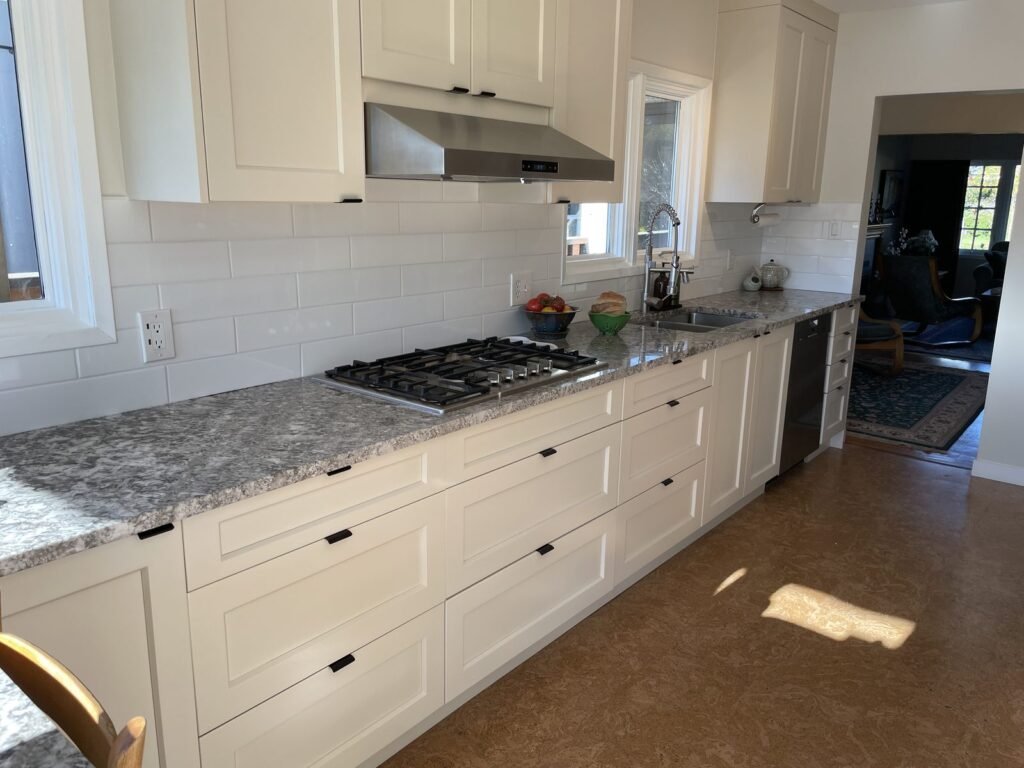
QUAY renovates; we don’t publish new-house pricing, so ask a home builder for that side. What we can show is what keeping a house has cost on real projects. In West Vancouver, we turned an open loft study into a bedroom with a brand new ensuite where there was no plumbing. It came in at about $58,000 before GST, including design, permits and two small changes, with construction from late October to early December 2025. In Dunbar, we kept a galley layout and replaced everything else in a full kitchen renovation that took about three weeks on site; we estimate it would cost $60,000 to $70,000 to build today.
Phasing is one of renovation’s advantages. On a Coquitlam home refresh, the bathroom, flooring, painting, custom millwork and kitchen work were planned as a first phase of about three weeks on site, with a garage conversion following as a second phase. Our 2026 renovation cost report shows a 234 sq. ft. garage conversion in a Coquitlam house at $22,036 before GST, which added about three weeks to the schedule. For how to set a whole-house budget with a contingency, see our guide to planning a house renovation budget.
Approvals differ too. The City of Vancouver says a permit is generally needed for renovations that move interior walls or existing plumbing, electrical or gas lines, and for structural repairs. For simple residential renovations under $250,000, the City’s Residential Renovation Fast Track issues permits within a week. A renovation under permit also brings energy requirements: the City says the 2025 Vancouver Building By-law requires energy-efficient measures as part of a house renovation, depending on the year of the permit application and the total cost of the project.
A simple way to decide
- Write down the end goal: the rooms, the number of homes on the lot and how long you plan to stay.
- Get the structure assessed: foundation, framing and the condition of the building envelope.
- Check the zoning: what R1-1 allows on your lot, and whether the house qualifies as a character house.
- Test for hazardous materials before either path, and check whether green demolition rules would require deconstruction.
- Price both paths in full, including the months before construction and the cost of living elsewhere.
- Decide on the result, not the method: the path that gives you the house and the lot you want, for a cost and timeline you can carry.
If keeping the house is the answer, design-build keeps the design, drawings, permits and construction with one team, so the scope and the price are set before work starts. To talk through your house, book a discovery call.
Renovate or rebuild: common questions
Should I renovate or rebuild an old house in Vancouver?
Renovate when the foundation and structure are sound and the existing house can hold what you need. Consider rebuilding when the structure has failed or when your goal, such as a multiplex, needs a new building. Check the zoning, the house’s character or heritage status and the full cost of each path before deciding.
Can I add units if I keep my character house?
Often, yes. The City of Vancouver offers optional zoning incentives for projects that retain a pre-1940 character house, including additional strata units and floor area, and waives the bonus density charge that applies to R1-1 multiplexes for character retention projects. The R1-1 schedule lists infill with a retained character house and conversion of a character house into multiple units.
Do I have to deconstruct my house instead of demolishing it?
In Vancouver, deconstruction is mandatory for homes built in whole or in part before 1910, and for homes on the Vancouver Heritage Register built in whole or in part before 1950. Other houses must still meet the City’s minimum reuse and recycling requirements, but can be deconstructed, relocated or demolished by machine with materials sorted for recycling.
Do I need a permit to renovate an older house?
Generally, yes, if the work moves interior walls or existing plumbing, electrical or gas lines, or involves structural repairs. Replacing fixtures, cabinets or flooring and painting usually do not need one. Simple residential renovations under $250,000 can use the City’s Residential Renovation Fast Track, which issues permits within a week.
Can I live in my house while it is renovated?
Often, yes, depending on which rooms are affected and whether kitchens, bathrooms or building services are out of use. Phasing helps: on one Coquitlam home, the kitchen, bathroom and finishes were done in a first phase of about three weeks on site, with a garage conversion following later. A rebuild means living elsewhere for the whole project.
Renovate or Rebuild?
Related Posts
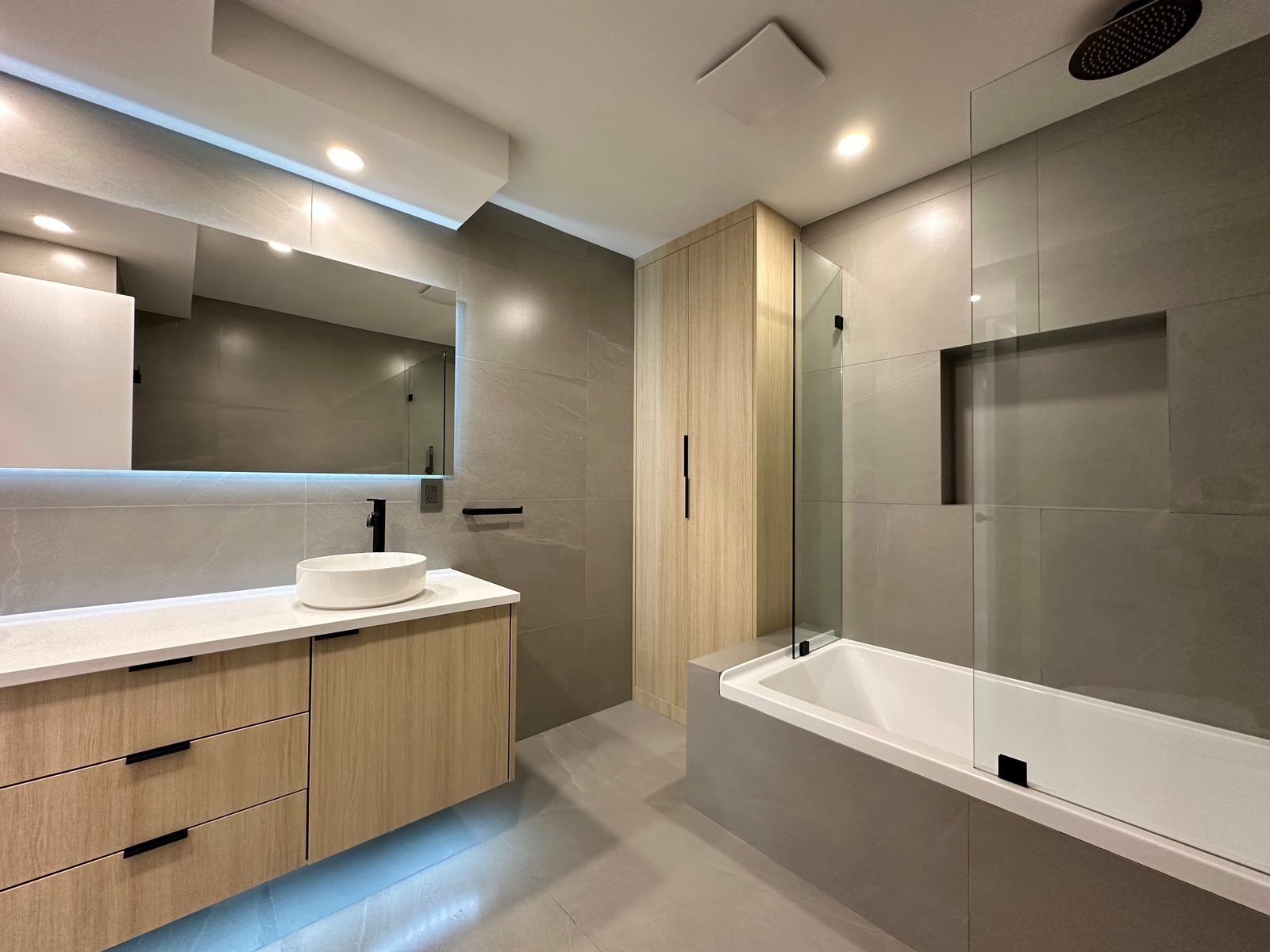
Bathroom Renovation Ideas From 13 Real QUAY Projects