- Renovations
Which Renovations Need a Permit in Vancouver? A Project-by-Project Guide
- By QUAY Construction
In the City of Vancouver, a renovation needs a permit when it changes the building or its systems: moving or adding walls, structural work, new living space, a secondary suite, a deck, or any new or moved plumbing, wiring or gas line. Cosmetic work does not: painting, new flooring, and replacing cabinets or fixtures where they already are. Most real projects sit somewhere in between, which is why we check the permit path for every job at the planning stage. If you are planning a larger project, our home renovation service in Vancouver covers design, drawings, permits and construction with one team; this guide is the project-by-project reference behind it.
Quick answer. Vancouver uses four main permits for home renovations: a building permit for walls, structure, new area, suites and decks; a plumbing permit to install, change or upgrade any part of the plumbing system; an electrical permit for nearly all electrical work; and a gas permit to install or replace a gas appliance, piping or venting. Inside City of Vancouver limits, the City issues all four, including electrical and gas, rather than Technical Safety BC. Simple residential renovations under $250,000 can use the City’s Residential Renovation Fast Track, which the City says issues permits within about a week. In a condo or townhouse, strata approval is a separate step on top of any City permit.
The rules below come from the City of Vancouver’s own permit pages, linked in each section. They apply to homes in the City of Vancouver; West Vancouver, Burnaby, North Vancouver and the other municipalities set their own requirements.
Which renovations need a permit: project-by-project table
Use this as a first check, then confirm your exact scope. When the City’s lists don’t settle it, the City asks you to contact its Development and Building Services Centre before you start.
| Project | Permit usually needed in Vancouver | Why |
|---|---|---|
| Painting, new flooring, new cabinets or countertops in the same layout | None | The City lists painting and replacing fixtures, cabinets or flooring as work that does not need a permit. |
| Kitchen with the sink, dishwasher or range moved, or new circuits | Plumbing, electrical and, for gas, gas permits; building permit if walls move | Moving plumbing, electrical or gas lines is permit work. |
| Bathroom refresh: new toilet, vanity, tub or faucet in the same spot | Usually none | Repairing or replacing fixtures in the same location, and replacing faucets, is exempt from a plumbing permit. |
| Bathroom with relocated fixtures, or a new bathroom | Plumbing permit, plus a building permit where walls are built or moved | Changing the plumbing system needs a permit; so does moving interior walls. |
| Removing or moving an interior wall | Building permit | Moving interior walls and structural repairs are on the City’s permit list. A load-bearing wall also needs a structural design. |
| Finishing a basement to create new rooms | Building permit, plus trade permits for new plumbing, wiring or gas | Moving interior walls and creating new area are both on the City’s permit list. |
| Adding a secondary suite | Building permit, plus trade permits | The City names adding a secondary suite to an existing house as permit work. |
| Building or altering a deck, garage or shed | Building permit | All three are on the City’s permit list. |
| New pot lights, outlets, circuits or a panel upgrade | Electrical permit | The City requires an electrical permit for all electrical work, with narrow exceptions. |
| Swapping a defective switch, receptacle or fuse for the same type and rating | None | One of the City’s electrical exemptions. |
| New gas range, fireplace, furnace or gas line | Gas permit | Installing or replacing a gas appliance, piping or venting needs one. |
| Replacing an existing electric hot water tank | None | On the City’s no-permit list. |
| Roofing, gutters and drain pipes; minor non-structural exterior repairs | None | On the City’s no-permit list. |
| New or enlarged window or door openings | Confirm with the City | Not on the no-permit list; a new opening cuts into the wall framing, so check before you order. |
| Drywall repairs to a fire separation in a multi-unit building | Building permit | Named specifically on the City’s permit list. |
Sources: City of Vancouver, When you need a permit, Plumbing and gas permits and Electrical permits for construction or renovation.
The four permits, and what each one covers
Building permit
The building permit covers the structure and layout of the home. The City’s list of work that generally needs one includes renovations that create new area, adding a secondary suite, moving interior walls or existing plumbing, electrical or gas lines, structural repairs, and building or altering a garage, shed or deck. In multi-unit buildings it also covers drywall repairs to fire separations, which matters in condos and townhouses where the walls between homes are rated assemblies.
A building permit usually means drawings. For a load-bearing wall, it also means a structural design for the beam and posts that replace it. That is the part of a permit application that takes the most planning, so it belongs at the start of the project, not after demolition.
Plumbing permit
The City requires a plumbing permit to install, change or upgrade any part of a plumbing system. Four things are exempt: repairing or replacing valves or faucets, repairing or replacing fixtures that stay in the same location, clearing stoppages, and repairing leaks. In practice, a new vanity or toilet where the old one was is fine without a permit; moving the toilet across the room, adding a shower or adding a laundry is not.
Electrical permit
Vancouver requires an electrical permit for all electrical work, with two exceptions: replacing defective fuses, receptacles, switches or bulbs with units of a similar type and rating, and minor work covered by an existing annual electrical permit. New pot lights, extra outlets, under-cabinet lighting circuits, heated floors and panel upgrades all need one.
Gas permit
A gas permit is needed to install or replace a natural gas appliance, piping or venting. Swapping an electric range for gas, adding a gas fireplace, or replacing a furnace all count.
City of Vancouver or Technical Safety BC?
Across most of BC, Technical Safety BC issues electrical and gas permits. Vancouver is one of ten local governments that issue their own: according to Technical Safety BC’s jurisdiction page, the City of Vancouver handles both electrical and gas, Burnaby and both North Vancouvers do the same, Richmond issues its own gas permits only, and Surrey and the District of West Vancouver issue their own electrical permits only. Technical Safety BC still licenses the contractors. If your home is in Vancouver, your electrical and gas permits come from the City.
Real QUAY projects and the permits they needed
Three recent projects show how the same rules play out on real jobs:
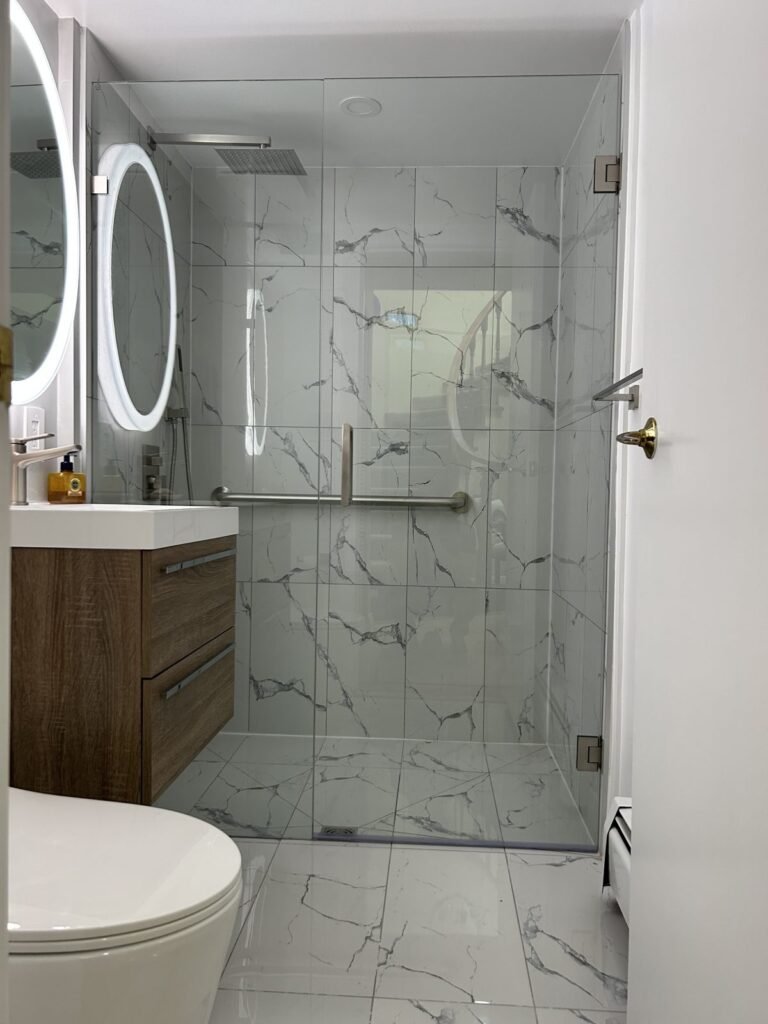
- A new bathroom in a Shaughnessy townhouse. We turned a ground-floor closet into an accessible bathroom with a curbless shower. Because it was a new bathroom, with new plumbing, QUAY prepared the drawings, applied for the City of Vancouver building permit and handled the strata approval before work started. It came in at about $42,000, including the drawings and the permit process. See the Shaughnessy bathroom project.
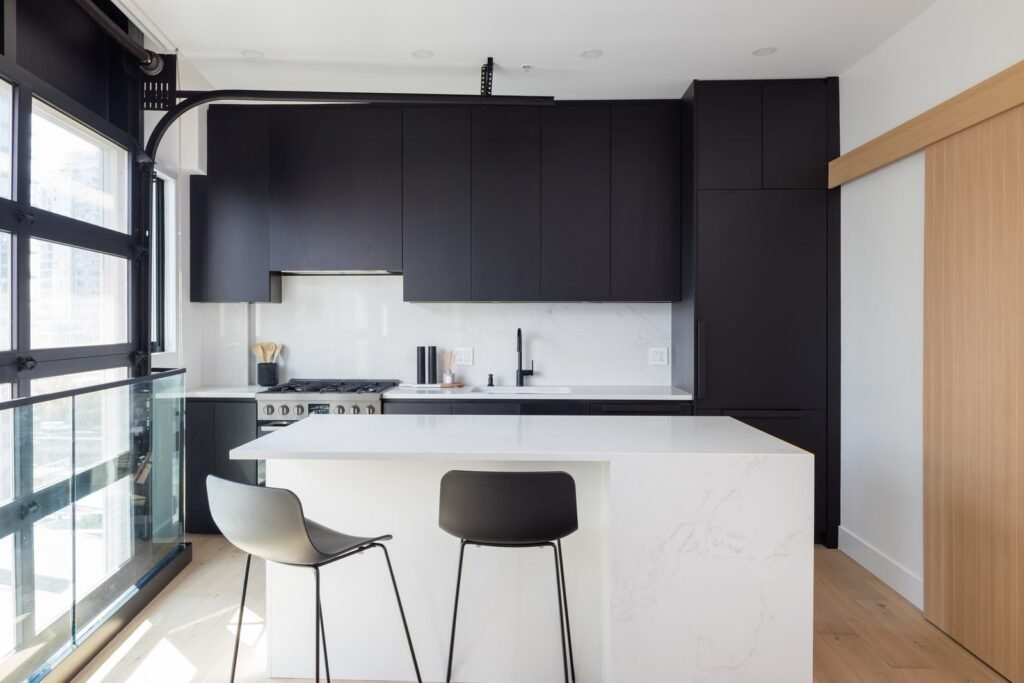
- A two-level loft near Gastown. A full condo renovation with a new kitchen, two bathrooms and a new linear gas fireplace. Before work started we prepared the strata renovation request and pulled plumbing and gas permits for the bathrooms and the fireplace. The approved budget was about $162,500 before GST, with construction on site from late April to June 2021. See the Downtown Vancouver loft renovation.
- The kitchen in that loft. Even the kitchen needed paperwork: we prepared the strata renovation application and handled the plumbing permit as part of the job. The Downtown Vancouver condo kitchen page shows the result.
The pattern holds across our work: cosmetic scope rarely needs a permit, but as soon as a fixture moves, a wall comes out or a gas line goes in, the permit is part of the job, and its timing is part of the schedule.
How to get a renovation permit in Vancouver, step by step
- Define the scope. The permit path follows the scope. List what moves, what is added and what stays; the table above then tells you which permits are in play.
- Check strata and heritage first. In a strata, BC’s Standard Bylaws say owners need written strata council approval to alter common property, limited common property or certain parts of their strata lot (BC government: strata owners). If your house is protected by a heritage designation bylaw or heritage revitalization agreement, or sits in a heritage conservation area, work that affects protected features, usually the exterior, can need a heritage alteration permit.
- Prepare drawings and documents. Building permits need drawings; structural changes need an engineer’s design. Trade permits list the fixtures, circuits or appliances involved.
- Apply, using the fast track if you qualify. The City’s renovate a house page describes the Residential Renovation Fast Track for simple residential renovations under $250,000, which the City says issues permits within about a week. Projects that don’t qualify go through the standard building or development permit process instead, so check eligibility before you set a start date.
- Book inspections as the work progresses. The City lets you book building, plumbing, electrical and gas inspections for the project. Inspections happen at set stages, such as before walls are closed, so the schedule has to leave room for them.
- Close out the permit. A final inspection completes the record that the work was done to code, which matters when you sell or make an insurance claim.
What happens if you renovate without a permit
The City is direct about the risks of working without a permit. If work starts before a required permit is issued, there is a work-without-permit penalty, typically double the original permit fee, and all work has to stop while the late application is processed. You may have to undo work that was done, or do more than you planned, such as sprinklers or seismic upgrades. Unpermitted work can also cause problems when you sell or make an insurance claim. And the homeowner pays those fees and penalties, even if a contractor said no permit was needed.
Room-by-room permit guides
This page is the overview. For the detail on a single room, go to the guide for that project:
- Kitchen renovation permits in Vancouver: when cabinets, plumbing, wiring and gas trigger a permit.
- Do you need a permit to renovate a bathroom in Vancouver?: fixture swaps, relocations and new bathrooms.
- Do you need a permit for a basement renovation?: finishing a basement, new rooms and bathrooms.
- Converting a basement to a legal suite: the extra steps a self-contained suite involves.
- What renovations can you do in a condo?: strata rules alongside City permits.
- Permits for home renovations in West Vancouver: the District of West Vancouver’s rules, which differ from the City’s.
- Office renovation permits in Vancouver: tenant improvements in commercial space.
For a wider overview of approvals across Greater Vancouver, see our renovation permit guides. Permit fees, drawings and engineering are part of the project cost; our Vancouver renovation cost report shows typical ranges by project.
Planning a renovation and not sure which permits it needs? Book a discovery call. Tell us what you want to change, and we’ll map out the permits, drawings and schedule, then give you a detailed fixed-price proposal before construction starts.
Renovation permits in Vancouver: common questions
Do you need a permit to renovate a kitchen in Vancouver?
Not if you are replacing cabinets, countertops or flooring in the same layout; the City of Vancouver lists those as work that does not need a permit. Moving the sink or dishwasher needs a plumbing permit, new circuits or outlets need an electrical permit, a new gas range or line needs a gas permit, and moving walls needs a building permit.
Can I replace a toilet or vanity in Vancouver without a permit?
Yes, if it stays in the same location. The City exempts repairing or replacing fixtures that remain in the same location, and repairing or replacing faucets and valves, from the plumbing permit. Moving a fixture or adding a new one needs a plumbing permit.
Who issues electrical and gas permits in Vancouver?
The City of Vancouver issues its own electrical and gas permits. Technical Safety BC issues them in most of the province, but Vancouver is one of ten local governments that administer their own, so homeowners in the City apply to the City.
How long does a renovation permit take in Vancouver?
It depends on the scope. The City’s Residential Renovation Fast Track, for simple residential renovations under $250,000, issues permits within about a week, according to the City. Projects that don’t qualify go through the standard building or development permit process instead.
What happens if you renovate without a permit in Vancouver?
The City charges a work-without-permit penalty, typically double the original permit fee, and work must stop while the late application is processed. You may have to undo work or do more than you planned, and unpermitted work can affect selling the home or an insurance claim. The homeowner pays, even if a contractor said no permit was needed.
Does a condo renovation need a permit and strata approval?
Often both, and they are separate. Under BC’s Standard Bylaws, owners need written strata council approval to alter common property, limited common property or certain parts of their strata lot. City permits still apply to plumbing, electrical, gas and wall changes inside the unit, and drywall repairs to a fire separation in a multi-unit building need a building permit.
Not Sure Which Permits You Need?
Related Posts
Bathroom Renovation Ideas From 13 Real QUAY Projects