- Bathroom
Do You Need a Permit to Renovate a Bathroom in Vancouver?
- By QUAY Construction
Some bathroom work in Vancouver needs no permit at all, and some needs a plumbing, an electrical and a building permit. The dividing line is clear once you know it: replacing things where they already are is treated very differently from moving them, adding them or opening up walls. If you are planning a complete renovation, our bathroom renovation services page explains how QUAY plans, permits and builds the whole room.
Quick answer. In the City of Vancouver, replacing a vanity, toilet, sink or faucet in the same location does not need a plumbing permit. Moving or adding a fixture does, and so does almost all electrical work. Moving or building interior walls, or adding a bathroom, needs a building permit. In a condo or townhouse, the strata may also have to approve the work in writing, which is separate from any City permit.
What needs a permit: the short version
| Bathroom work | What applies in the City of Vancouver |
|---|---|
| Replacing a vanity, toilet, sink or faucet in the same spot | No plumbing permit. The City lists repairing or replacing valves, faucets and fixtures that stay in the same location, repairing leaks and clearing stoppages as work that does not need one. |
| Moving a toilet, vanity, shower or tub, or adding a fixture | Plumbing permit. The City requires one to install, change or upgrade any part of a plumbing system. |
| New or replacement lights, new outlets, a fan or other wiring | Electrical permit. The City requires one for all electrical work, except replacing defective fuses, receptacles, switches or bulbs with units of similar type and rating. |
| Moving or adding walls, or adding a bathroom | Building permit, plus the plumbing and electrical permits for the new work. |
| Altering a condo or townhouse unit | Strata approval may be needed as well, separate from City permits. |
Does installing a new vanity require a permit in Vancouver?
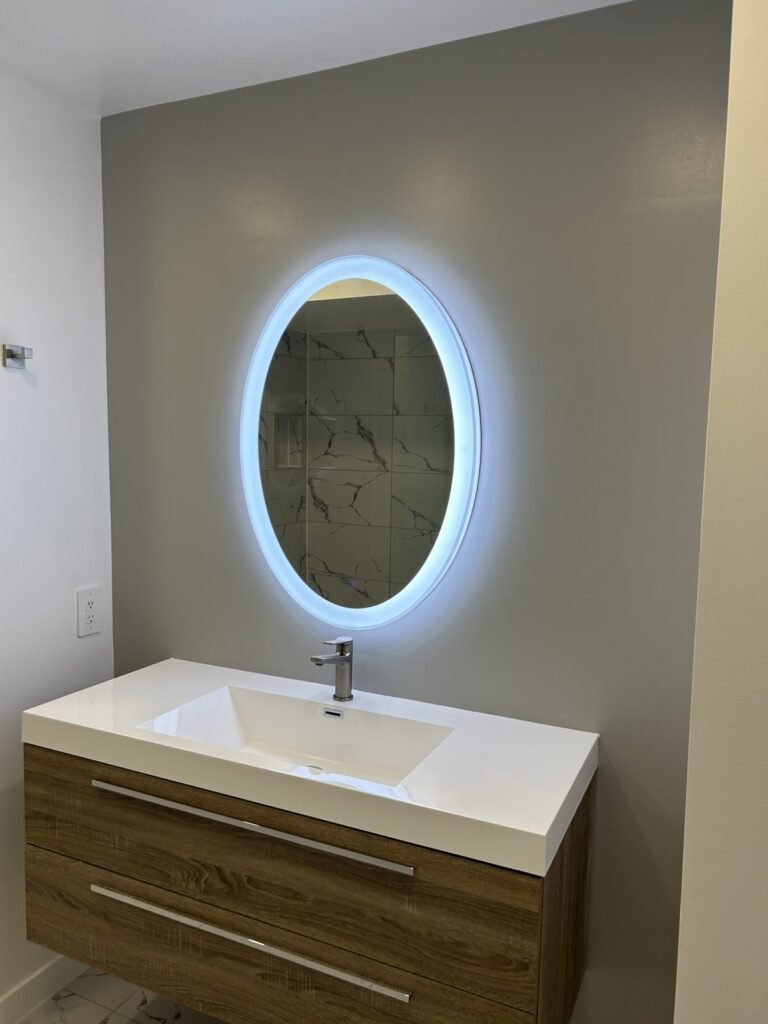
Not if it goes where the old one was. Replacing a vanity and its faucet in the same location is on the City’s list of plumbing work that needs no permit. The same applies to a new toilet on the existing drain or a new sink in the same place.
It changes when the plumbing changes. Moving the vanity to another wall, adding a second sink, or relocating the drain or water lines changes the plumbing system, so a plumbing permit applies. A new vanity light also counts as electrical work, because the City’s exemptions cover only like-for-like fuses, receptacles, switches and bulbs. If you are unsure about your scope, the City’s Development and Building Services Centre answers permit questions on 604-871-6701.
When moving plumbing triggers a permit
Most complete bathroom renovations touch the plumbing somewhere. Converting a tub to a walk-in shower, moving a toilet, adding a second sink or rerouting water lines all change the plumbing system, so they sit on the permit side of the City’s rule. If your goal is new finishes rather than a new layout, keeping the fixtures where they are keeps that work off the permit list.
Electrical work, and who can do it
Bathrooms usually involve electrical work: lighting, outlets, an exhaust fan, in-floor heat or a lit mirror. In Vancouver, the City requires an electrical permit for all electrical work, with narrow exceptions for like-for-like fuses, receptacles, switches and bulbs.
Technical Safety BC notes that, depending on where a property is, either it or the municipality issues electrical permits. It also says that owners of a strata unit or a non-strata duplex cannot get a homeowner electrical permit and must hire a licensed contractor. Inside the City of Vancouver, electrical permits are covered on the City’s own electrical permit page.
Walls, layout changes and new bathrooms need a building permit
The City’s building permit page says renovations such as an addition, or moving or installing interior walls, need a permit. For a bathroom, that covers taking space from a closet or hallway, moving a wall to fit a larger shower, or creating a bathroom where there was none. These projects usually need plumbing and electrical permits too, and the related building, plumbing and electrical inspections are booked with the City as the work progresses.
The City also has simpler routes for smaller projects: a field review process for small renovations that don’t require major upgrades, and a Residential Renovation Fast Track for simple residential renovation projects under $250,000. Eligibility for each is set out on the City’s renovating a house page.
Condo and townhouse bathrooms: strata approval is separate
A City permit and strata approval are two different things, and a condo bathroom can need both, one or neither. Under the Standard Bylaws in the Strata Property Act, an owner must get the strata corporation’s written approval before altering a strata lot in ways that involve the structure of the building, common property inside the lot, or the parts of the lot the strata must insure. Written approval is also needed before altering common property. The strata cannot unreasonably refuse, but it can make approval conditional on the owner agreeing in writing to take responsibility for the alteration’s expenses.
Your strata may have amended or added bylaws and renovation rules, so read the current set before you plan. Our cost guide lists what condo buildings commonly add to a bathroom project: strata renovation approval, elevator bookings, common-area protection, restricted work hours, plumbing shut-down coordination, noise restrictions, and procedures for material delivery and waste removal. Our condo bathroom renovations page shows how we plan around them.
A real example: a new bathroom in a Shaughnessy townhouse
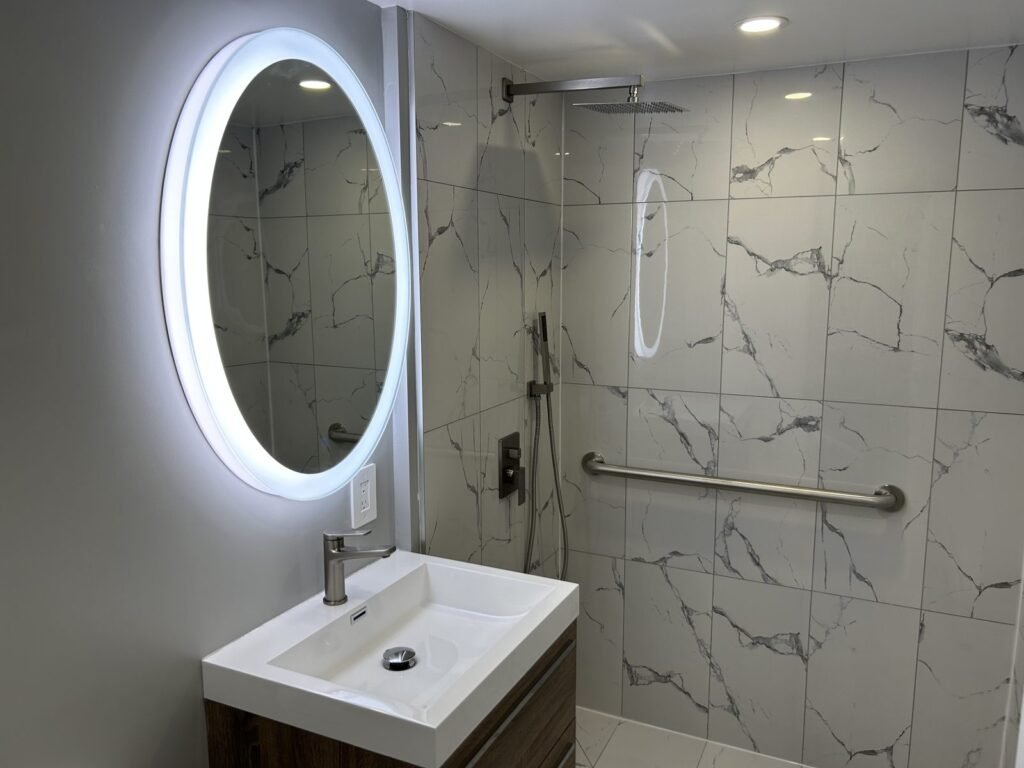
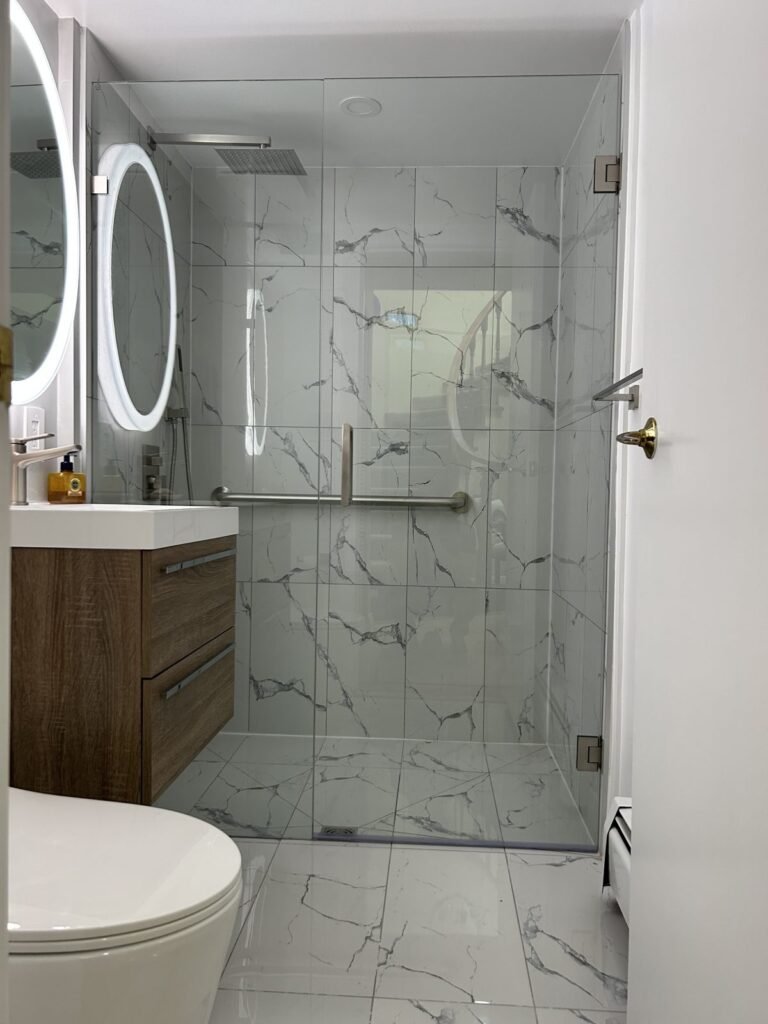
The owners of this Shaughnessy townhouse were getting ready for the client’s mother to move in, and there was no full bathroom on the ground floor. QUAY turned a closet into a new bathroom built around a curbless walk-in shower, with grab bars, a hand shower and a wall-hung vanity. Because it was a new bathroom, QUAY prepared the drawings, applied for the City of Vancouver building permit and handled the strata approval before work started.
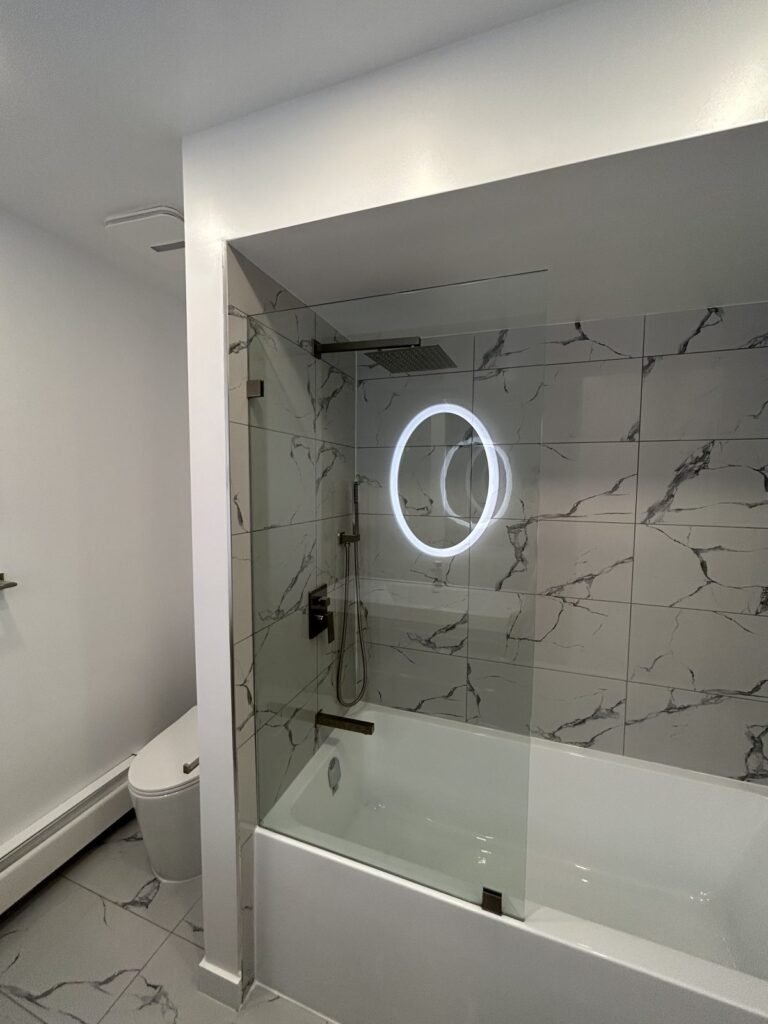
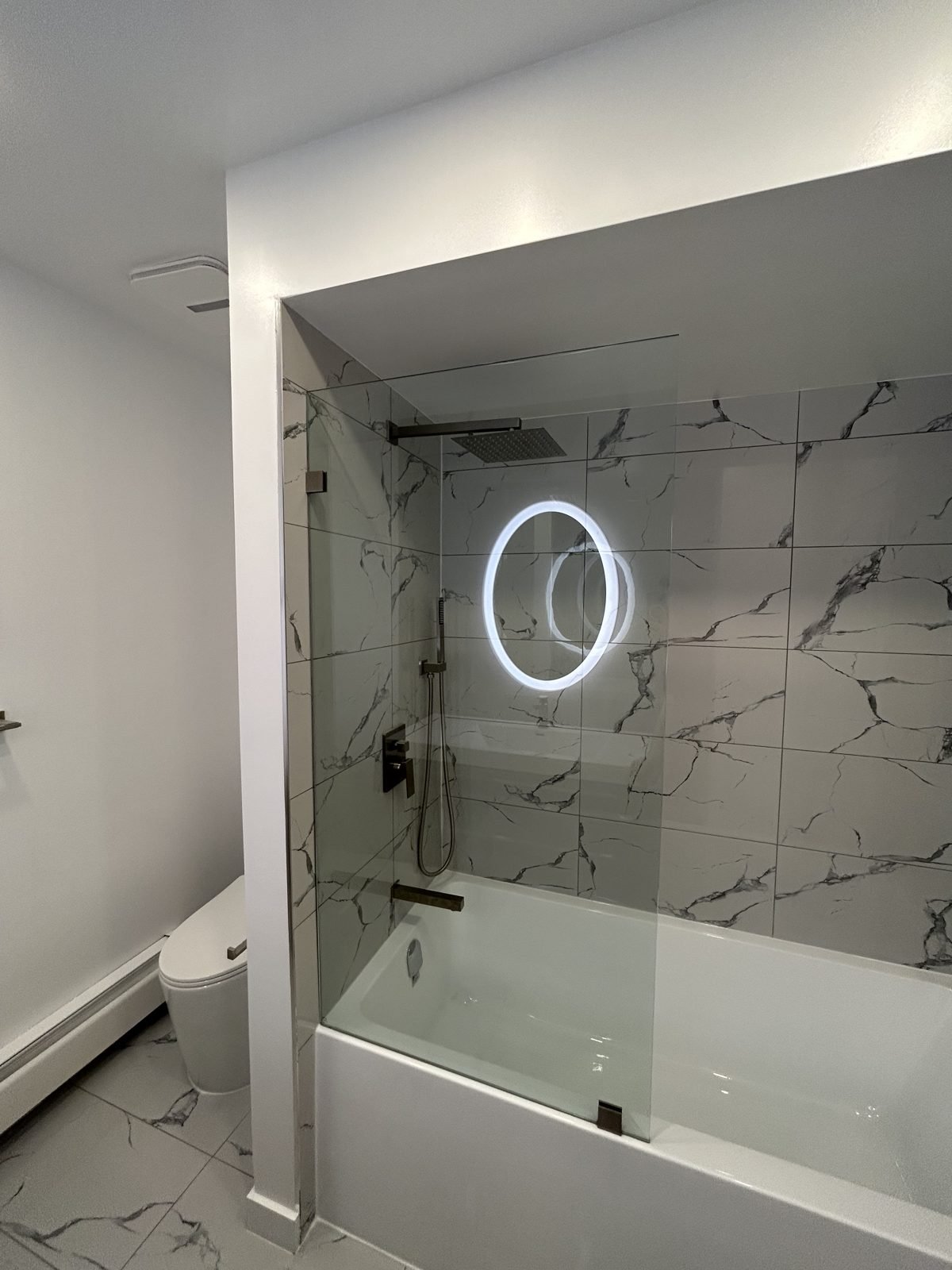
Upstairs, the main bathroom was taken back to the studs and rebuilt with a new tub and shower, marble-look tile and a floating vanity. The new bathroom came in at about $42,000 and the main bathroom at about $28,000, for about $70,000 in total, and both were completed in 2023. See the Shaughnessy bathroom project for photos of both rooms.
How permits affect your budget and schedule
Permits and approvals happen before construction, so they belong in the planning stage. Many complete QUAY bathrooms take approximately ten working days on site once planning, selections and procurement are complete. Larger bathrooms, custom work, inspections and complex layouts may require additional time, and in a condo the strata’s review comes before any of it.
On cost, complete bathroom renovations with QUAY commonly begin around $25,000 and often fall within a $25,000 to $45,000+ planning range. Size, layout changes and finishes set the final price. Our bathroom renovation cost guide breaks that range down by size, property type and finish level, and our bathroom renovation projects show what real rooms cost.
What QUAY handles
We prepare strata renovation requests for condos and coordinate municipal permits when the scope needs them. You get a detailed, fixed-price proposal before construction starts, and completed work is backed by our 12-month (365-day) workmanship warranty. Our permit guides cover other types of renovation.
For the work behind the tile, our shower waterproofing systems comparison explains the main options, and our small bathroom renovation guide covers layouts for tight rooms. Outside the City of Vancouver, permits come from your own municipality; in West Vancouver they come from the District, as our West Vancouver permits guide explains.
Planning a bathroom? Book a discovery call. We’ll review your scope and tell you which permits and approvals it needs.
Sources: City of Vancouver plumbing permit, electrical permit, building permit and renovating a house pages; Technical Safety BC electrical homeowner permits; Strata Property Act, Standard Bylaws 5 and 6; QUAY’s bathroom renovations page, bathroom cost guide and Shaughnessy project page. Permit rules change, so confirm your scope with the City before work starts.
Not sure what your bathroom needs?
Related Posts
Do You Need a Permit to Renovate a Bathroom in Vancouver?